
As your baby grows during pregnancy, your body undergoes remarkable anatomical shifts to make space. While abdominal expansion is widely expected, many new mothers are surprised to find that their ribcage has widened or flared outward. Experiencing postpartum rib flare can leave your upper abdomen feeling tender, make pre-pregnancy clothing fit differently, and subtly alter your breathing patterns during the fourth trimester.
Understanding why this structural shift occurs and adopting gentle, supportive recovery habits will help restore your natural ribcage position and deep core stability.
What Causes Rib Expansion During Pregnancy?
During gestation, your body releases high levels of relaxin, a hormone designed to soften the cartilage and ligaments connecting your bones. As your uterus expands upward, it pushes against the diaphragm and lower ribs.
To accommodate your growing baby, your lower floating ribs flare outward, increasing the costal angle of your ribcage. After delivery, these relaxed ligaments remain pliable for several months. Without intentional core re-education, your lower ribs may remain in this flared position rather than settling back into their natural alignment.
Common Signs You Have Expanded Ribs
Recognizing the symptoms of widened ribs helps you choose the right recovery techniques:
- Protruding Lower Ribs: The bottom edge of your ribcage noticeably sticks out farther than your chest, especially when standing or taking a deep breath.
- Intercostal Soreness: A dull, aching sensation in the muscles between your ribs or directly under your breastbone.
- Shallow Breathing: Feeling unable to take a complete, deep belly breath because your diaphragm is stuck in an elevated position.
- Upper Abdominal Discomfort: Persistent tension in your upper core wall where the abdominal muscles attach to the ribcage.
4 Steps for Postpartum Rib Flare Relief
Restoring your ribcage requires a combination of deep breathing, posture correction, and external support to encourage your body back into alignment.
1. Re-educate Your Diaphragm Through 360 Breathing
Shallow chest breathing keeps your lower ribs flared outward. Practice 360-degree diaphragmatic breathing by placing your hands on the sides of your lower ribcage. Inhale deeply through your nose, expanding your ribs sideways and backward into your hands. As you exhale slowly through your mouth, gently contract your deep core (transverse abdominis) and visualize your ribs knitting down and inward.
2. Utilize Gentle Core Compression
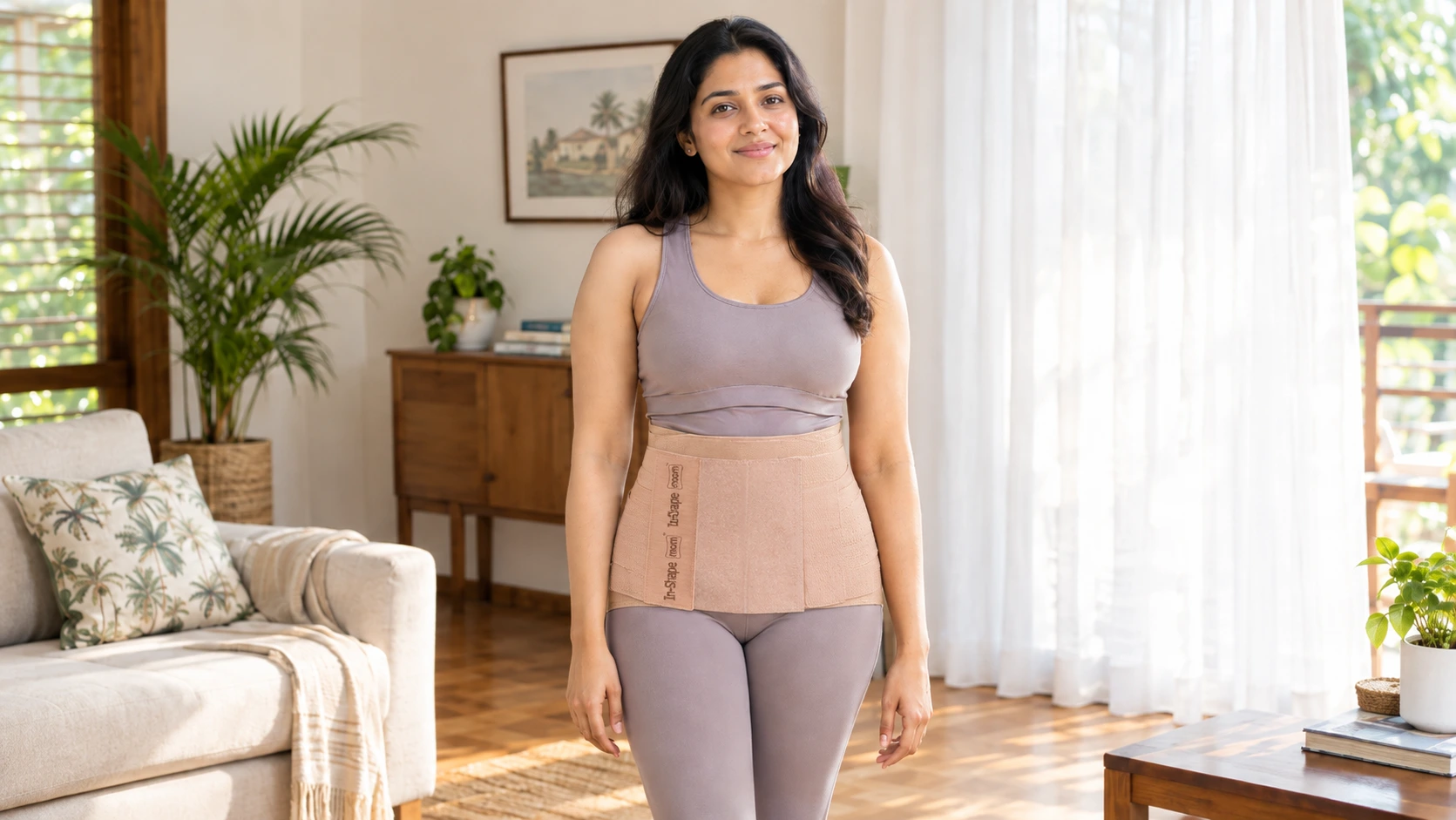
An anatomical support garment like the In-Shape mom postpartum belt provides gentle horizontal compression across the upper abdomen and lower rib line. This external tactile feedback reminds your body to draw the ribs inward during daily activities, protecting stretched tissues without restricting your natural breathing cycle.
3. Stretch Tense Intercostal Muscles
Tight back and chest muscles can pull your ribs into an unnatural position. Perform gentle side-body stretches by sitting tall, raising one arm overhead, and leaning softly to the opposite side. Hold for 20 seconds while taking slow, deep breaths into the stretched side of your ribs.
4. Practice Mindful Posture Alignment
Standing or sitting with an exaggerated arch in your lower back naturally forces your ribs to flare forward. Focus on keeping your pelvis in a neutral position, stacking your ribs directly over your hips rather than thrusting your chest forward when carrying or nursing your baby.
Restoring Your Midsection Safely
Rib realignment takes patience and consistent, low-impact care. By practicing 360-degree breathing and giving your core structural support, you can relieve ribcage pressure and rebuild your physical strength with confidence.
Support your fourth-trimester alignment with gentle, science-backed compression. Discover the In-Shape mom recovery belt collection at In-Shape Global.