Navigating the fourth trimester often comes with unexpected physical aches that extend beyond standard muscle soreness. If you experience sharp, catching pain in your hips, pubic bone, or lower back when walking or turning in bed, you may be dealing with postpartum pelvic girdle pain. This common condition affects the stability of your pelvic joints after childbirth. Understanding why these joint shifts happen and implementing targeted alignment strategies is essential for a safe, comfortable recovery.
What Causes This Joint Discomfort?
Pelvic girdle pain occurs when the three joints of your pelvis—the pubic symphysis at the front and the two sacroiliac (SI) joints at the back—move unevenly or become hypermobile.
During pregnancy, your body releases the hormone relaxin, which softens ligaments so your pelvis can expand for delivery. Following childbirth, these ligaments remain lax for several months. When combined with weakened abdominal wall muscles and the daily physical demands of carrying a newborn, the joints experience asymmetrical strain, resulting in persistent discomfort.
Common Symptoms to Look For
Because joint discomfort can radiate to different areas, it is helpful to recognize the specific signs associated with this condition:
- Pubic Bone Discomfort: A grinding or clicking sensation at the front center of your pelvic bone.
- Asymmetrical Hip Pain: Deep, aching pain on one or both sides of your lower back and buttocks.
- Movement-Induced Pain: Discomfort that worsens during weight-bearing activities, such as standing on one leg, climbing stairs, or rolling over in bed.
4 Effective Steps for Recovery
Realigning your pelvis requires gentle, stabilizing habits that minimize joint irritation while your ligaments gradually firm up.
1. External Support for Postpartum Pelvic Girdle Pain
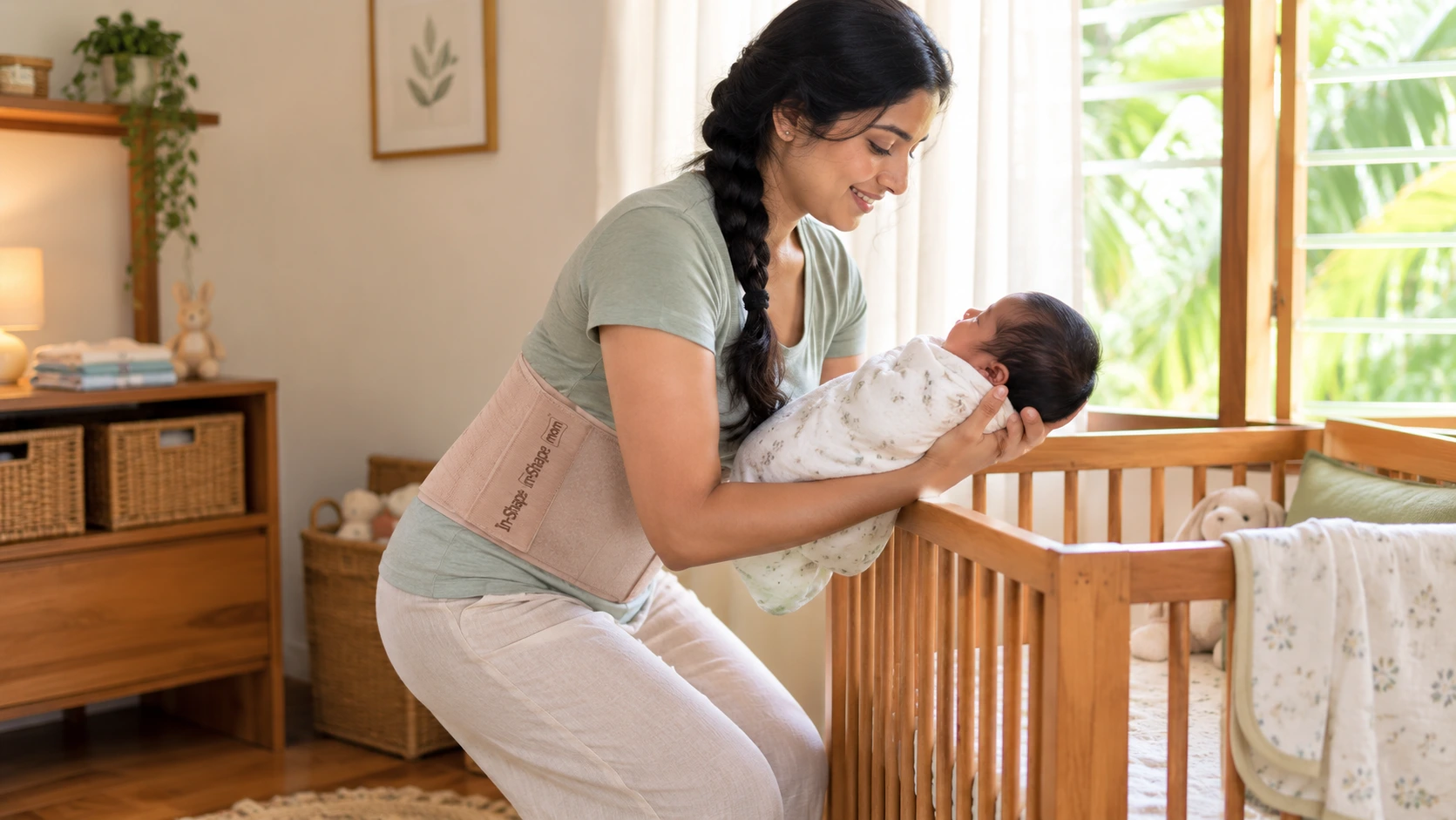
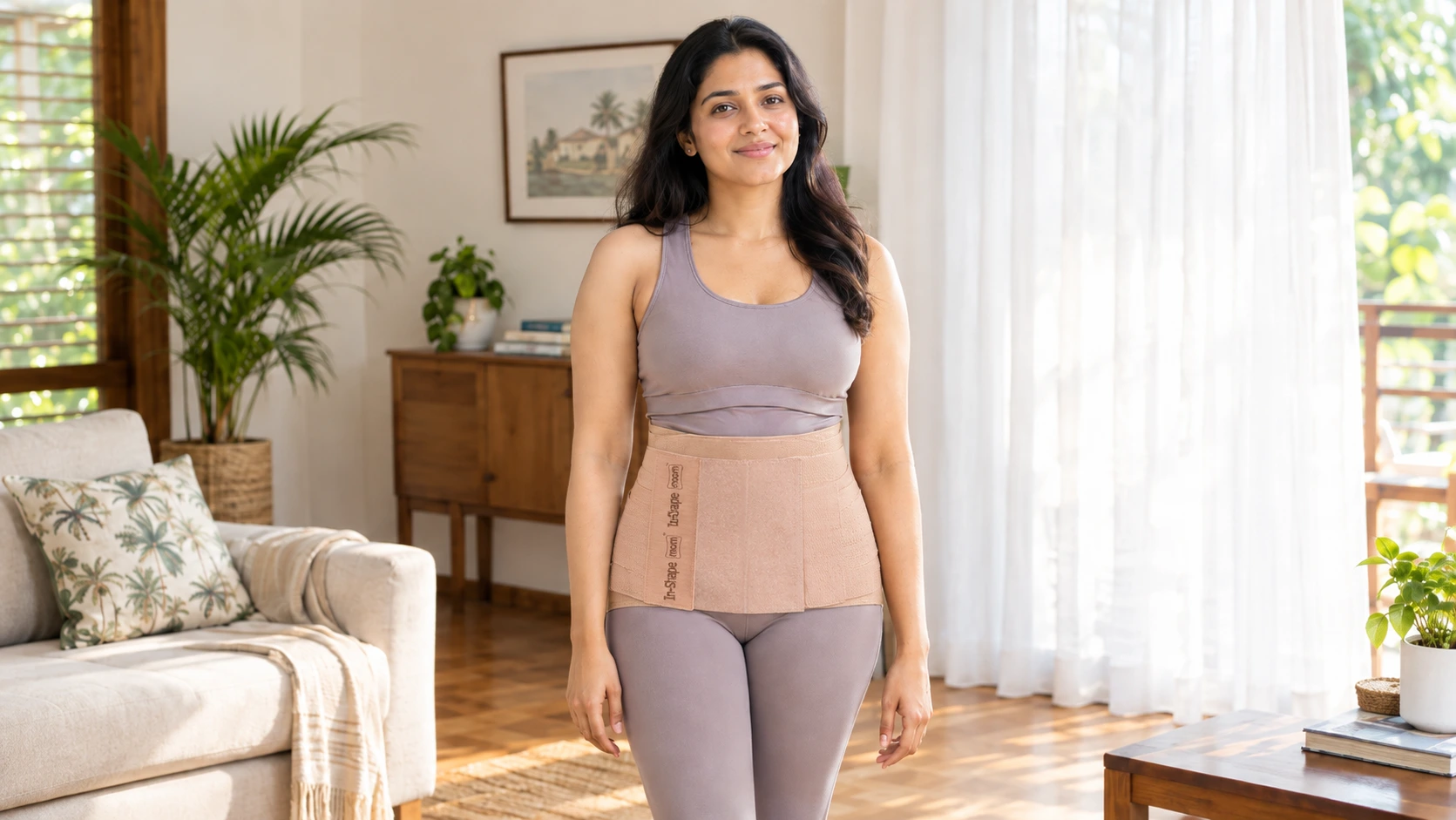
When your internal ligaments are lax, providing external stabilization is one of the fastest ways to reduce joint friction. Wearing an anatomical binder like the In-Shape mom postpartum belt delivers horizontal compression across the lower abdomen and hips. This anchors the joints, reduces strain on the pubic symphysis, and provides immediate relief during daily tasks.
2. Practice Symmetrical Movements
To avoid placing uneven pressure on your pelvic joints, keep your knees together whenever possible. Sit down to put on pants or shoes rather than standing on one leg, and keep your legs parallel when getting out of a car or turning over in bed.
3. Strengthen Deep Stabilizing Muscles
Rather than aggressive hip stretches, focus on isometric stability. Perform gentle pelvic floor contractions and deep diaphragmatic breathing to engage the transverse abdominis. These deep core muscles act as a natural stabilizing brace for your entire pelvic structure.
4. Use Targeted Thermal Therapy
Apply an ice pack wrapped in a soft cloth to the front of the pubic bone or lower back for 15 minutes to reduce localized joint inflammation. Follow up with warm compresses on tense gluteal muscles to ease surrounding muscle spasms.
Recovering Safely Over Time
Pelvic joint instability takes time to resolve, but consistent habits and proper compression can significantly speed up your comfort. By keeping movements symmetrical and stabilizing your core, you can heal safely and carry your baby without pain.
Reclaim your physical mobility and comfort. Explore the ergonomic joint support of the In-Shape mom recovery belt at In-Shape Global.