
The physical demands of caring for a newborn—constant bending, lifting, feeding, and rocking—can take a heavy toll on a new mother’s spine. If you experience a persistent ache in your lower spine or sharp fatigue when standing up, you are not alone. Finding safe, actionable strategies for postpartum lower back pain relief is essential to regaining your daily stamina and enjoying early motherhood without physical strain.
Understanding why back discomfort occurs after childbirth allows you to take targeted steps toward lasting recovery.
What Causes Lower Back Strain After Delivery?
During pregnancy, expanding abdominal muscles stretch and lose their functional strength, shifting your center of gravity forward. At the same time, joint-softening hormones relax the pelvic and spinal ligaments.
After delivery, your core wall remains temporarily compromised. Without strong front abdominal support, your lower back muscles are forced to overwork to keep your upper body upright. Combined with poor nursing posture and frequent lifting, this muscular imbalance leads to chronic lumbar fatigue.
Common Symptoms of Postpartum Back Fatigue
While mild aching is standard, recognizing specific signs of spinal strain can help you adjust your daily routines:
- Dull Lumbar Aching: A continuous, deep ache across your lower back that intensifies toward the end of the day.
- Stiffness Upon Rising: Difficulty standing up straight after prolonged sitting or nursing sessions.
- Postural Fatigue: Feeling an overwhelming need to lean against a wall or slump forward when standing or holding your baby.
4 Steps for Postpartum Lower Back Pain Relief
Relieving strain on your lower spine requires external core stabilization paired with ergonomic movement adjustments.
1. External Compression for Postpartum Lower Back Pain Relief
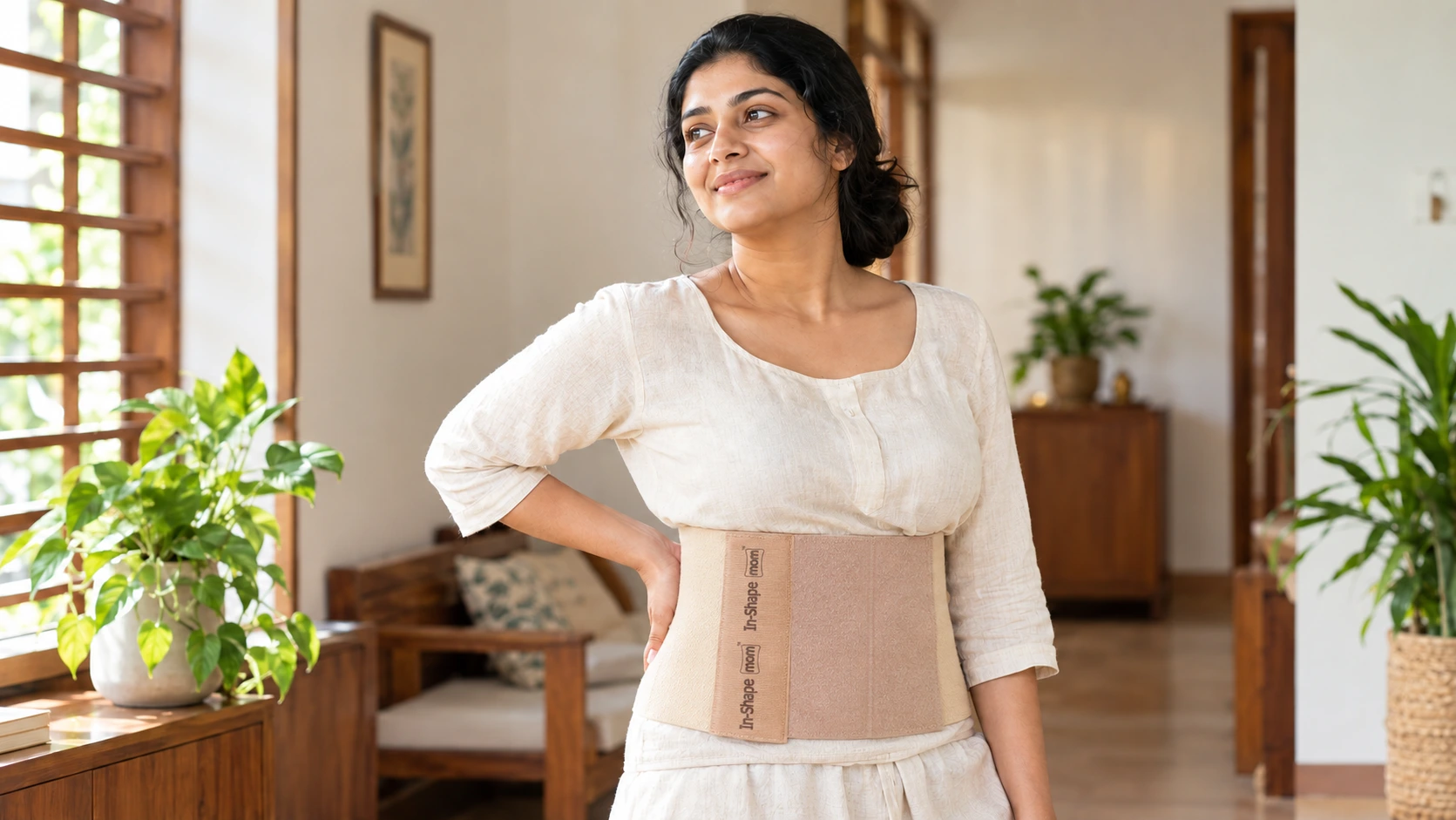
When weak abdominal muscles fail to support your lumbar spine, providing external core reinforcement makes an immediate difference. Wearing an anatomical binder like the In-Shape mom postpartum belt delivers targeted horizontal compression around your midsection. This acts as an external core wall, taking the load off overstressed back muscles and encouraging proper spinal alignment throughout the day.
2. Practice Mindful Body Mechanics
When picking up your newborn from a crib or playpen, avoid bending straight over from your waist. Always bend at your knees and hips, keeping your baby close to your chest before standing up. This technique uses your powerful leg muscles rather than straining your lower back.
3. Support Yourself During Nursing
Slumping forward while feeding creates intense pressure on your lumbar disc space. Bring your baby to your breast using supportive nursing pillows rather than leaning your body down to your baby. Sit in a chair with firm lumbar support and keep your feet flat on a footrest.
4. Re-engage the Transverse Abdominis
Rebuilding front core tension is the permanent solution to lower back strain. Practice gentle diaphragmatic breathing while lying on your back with bent knees. As you exhale, gently draw your belly button inward toward your spine, engaging the deep abdominal muscle that naturally stabilizes your back.
Rebuilding Back Strength Safely Over Time
Spinal recovery requires consistent daily support and gentle care. By improving your daily movement mechanics and providing your core with ergonomic compression, you can relieve spinal fatigue and move comfortably through your fourth trimester.
Give your spine the reinforcement it needs. Explore the ergonomic support of the In-Shape mom recovery belt collection at In-Shape Global.