Undergoing a cesarean section is a major abdominal surgery, yet mothers are often expected to care for a newborn immediately while navigating intense physical healing. If you are experiencing sharp incision pain when laughing, coughing, or sitting up, you need a targeted strategy for postpartum c-section recovery. Understanding how to protect your healing tissues and support your weakened core is essential for safely restoring your mobility during the fourth trimester.
Understanding the Healing Process
During a cesarean delivery, doctors make incisions through multiple layers of skin, muscle, and tissue. While the surface scar may look healed within a few weeks, the deep internal tissues require several months to fully repair. During this time, your abdominal muscles are significantly weakened, forcing your back and pelvic floor to compensate. This structural imbalance can make simple daily tasks—like standing up, walking, or nursing—feel daunting and exhausting.
Common Challenges After Surgery
Because your abdominal wall has been surgically altered, you may encounter unique physical hurdles during your fourth trimester:
- Incision Tenderness: Sharp, stinging pain around the lower abdomen, especially when intra-abdominal pressure changes (e.g., sneezing, coughing, or laughing).
- Core Weakness: A profound feeling of “emptiness” or lack of structural stability in your midsection.
- The “C-Section Slump”: A subconscious tendency to hunch forward to protect the incision site, which inevitably leads to secondary upper back and neck pain.
4 Essential Steps for Postpartum C-Section Recovery
Rebuilding your core strength after surgery requires gentle, highly intentional habits that protect your incision while encouraging deep tissue repair.
1. Splint Your Incision During Movement
Any sudden increase in pressure can pull on your internal stitches. Keep a small, firm pillow nearby. Whenever you need to cough, sneeze, or laugh, press the pillow gently but firmly against your lower abdomen to brace the area and prevent micro-tears.
2. Utilize Ergonomic Core Compression
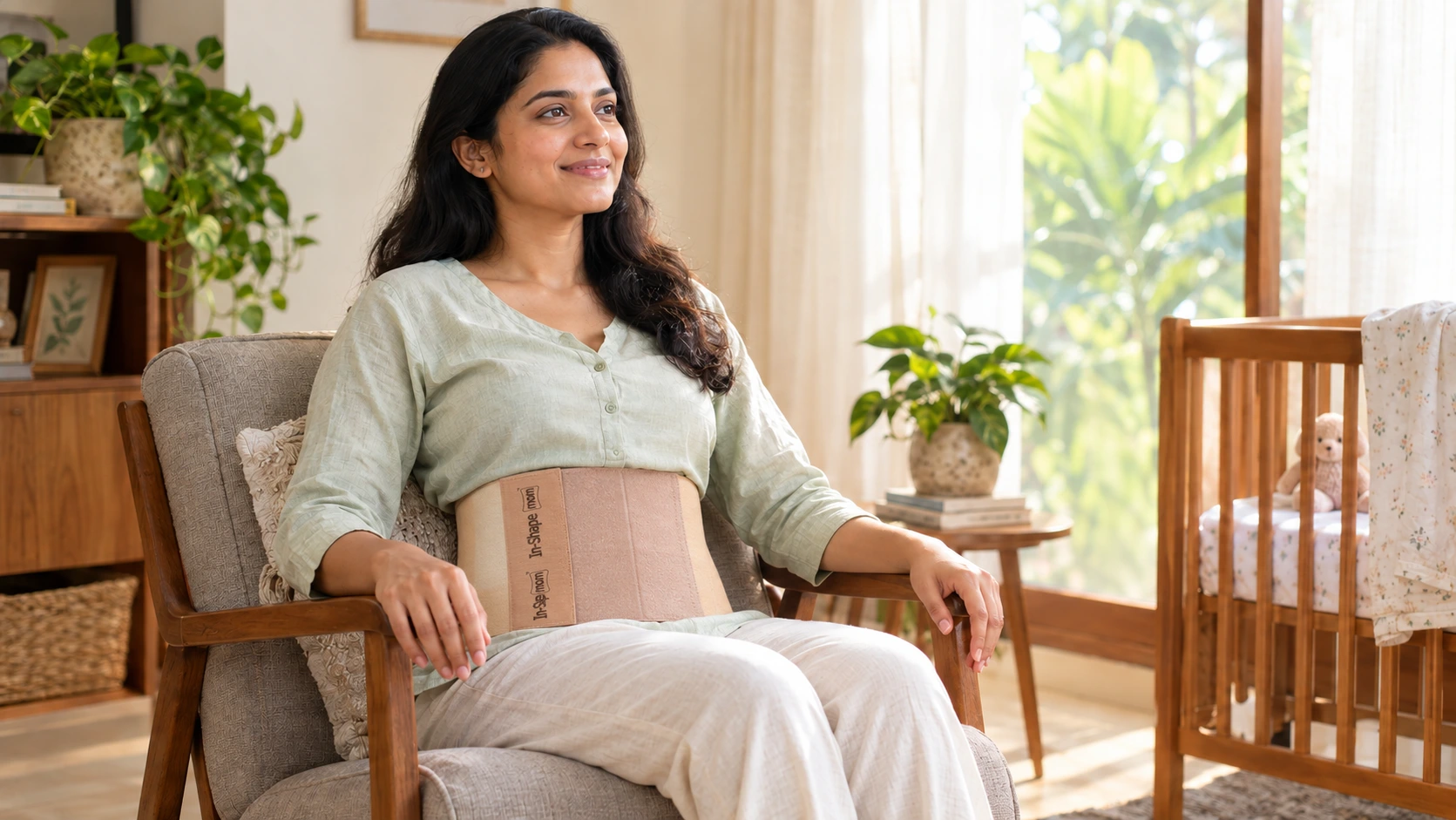
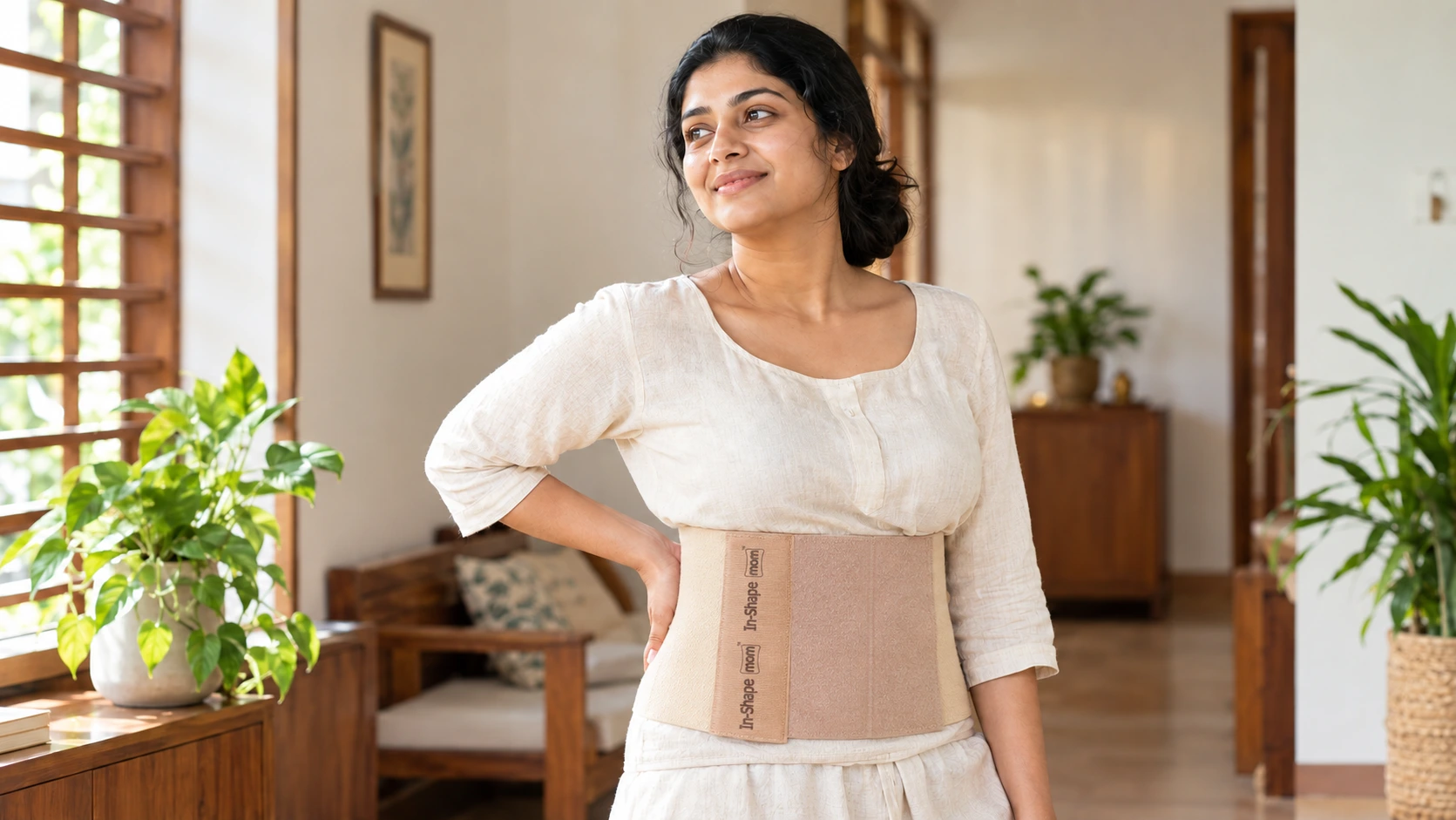
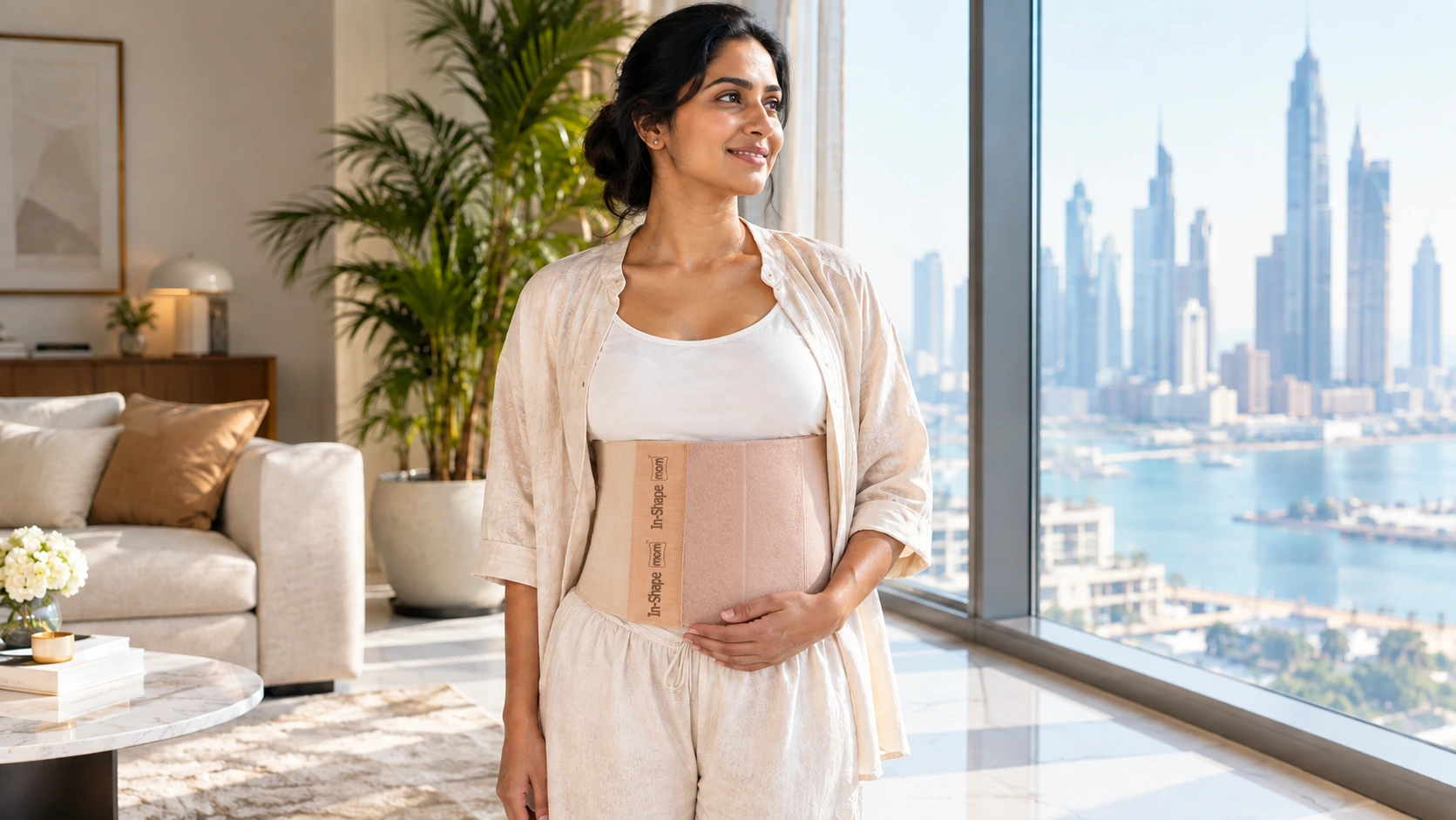
When your internal muscles are healing from surgery, external stabilization is crucial. Wearing an anatomical binder like the In-Shape mom postpartum belt provides gentle, consistent compression across the midsection without digging into your scar. This support anchors your weakened abdominal wall, reduces friction over the incision area, and promotes a healthy, upright posture, making it a cornerstone of effective postpartum c-section recovery.
3. Practice the “Log Roll” Technique
Never engage in a traditional sit-up motion to get out of bed, as this places severe, direct strain on your surgical site. Instead, roll entirely onto your side, drop your legs off the edge of the bed, and use your upper body strength to push your torso up into a seated position.
4. Engage in Gentle, Restorative Breathing
Deep breathing promotes oxygen-rich blood flow to healing tissues and gently reactivates your core. Practice diaphragmatic breathing: inhale slowly to expand your lower ribcage sideways, and as you exhale, gently draw your belly button toward your spine without straining or bearing down.
Protecting Your Healing Journey
Recovering from abdominal surgery while caring for a newborn is a monumental physical task. By moving mindfully, bracing your incision against sudden pressure, and utilizing external compression, you can minimize discomfort and safely regain your functional strength.
Reclaim your mobility and protect your core safely. Explore the In-Shape mom recovery belt collection at In-Shape Global.