
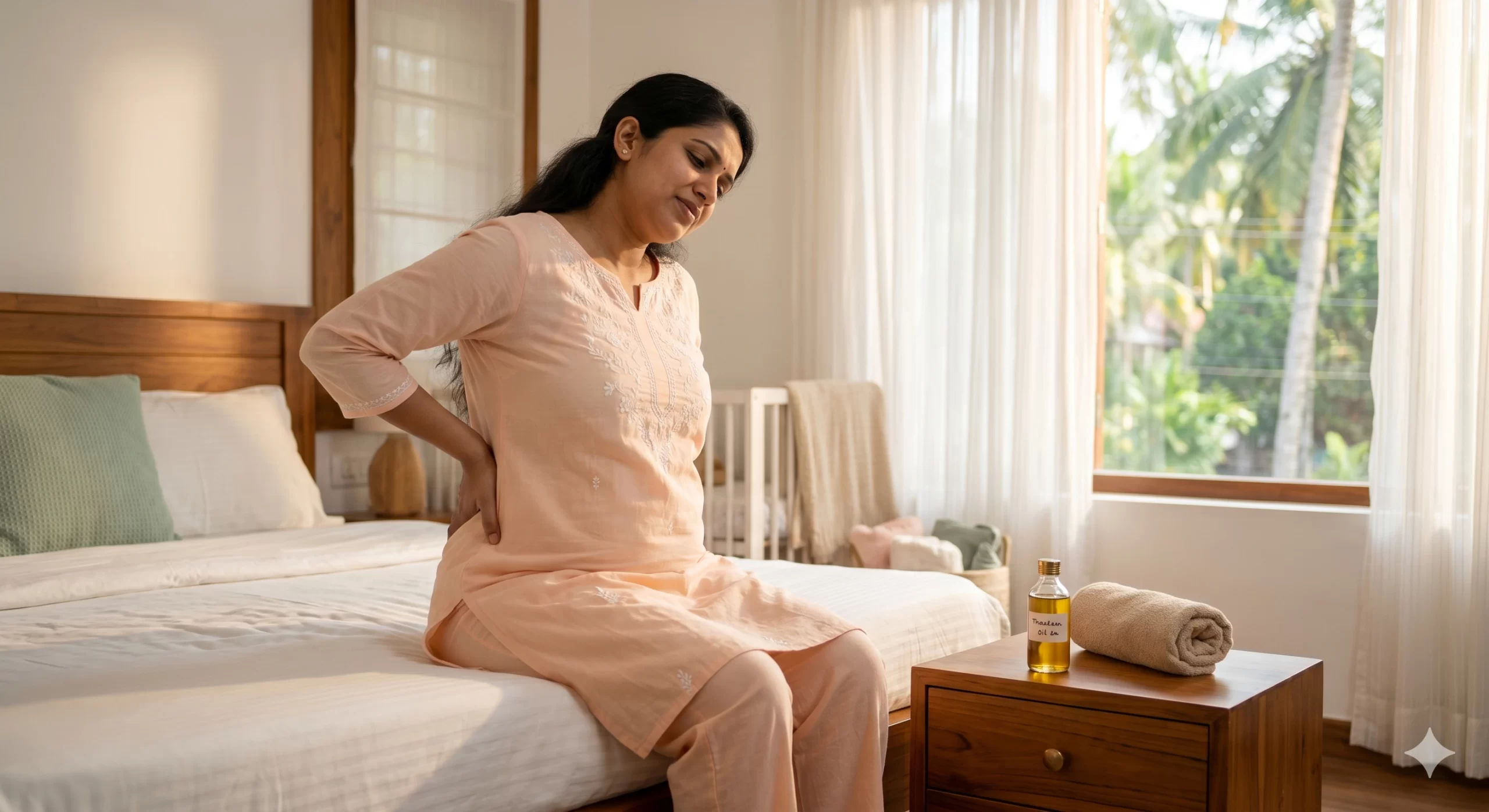
Bringing a new baby home is pure magic, but finding out how to relieve postpartum back pain naturally is often an unexpected and frustrating hurdle. Between the physical toll of labor, the sudden shift in your center of gravity, and the endless hours spent looking down at your newborn, your lower back is taking on an immense amount of strain.
Whether you are navigating the early weeks of the fourth trimester or are several months into motherhood, enduring daily aches does not have to be your “new normal.” Here are five practical, holistic strategies to support your spine and reclaim your physical comfort.
Why Your Back Hurts After Birth
During pregnancy, your body releases a hormone called relaxin, which loosens your ligaments to prepare your pelvis for childbirth. After delivery, these ligaments remain loose for several months. Combined with a stretched, weakened abdominal wall, your lower back muscles are forced to overcompensate to keep you upright. This muscle fatigue leads to the stiffness and sharp aches so many new mothers experience.
1. Optimize Your Feeding Posture
Whether you are nursing or bottle-feeding, you will spend hours sitting down. The most common mistake new mothers make is hunching over to bring their breast or the bottle down to the baby.
- The Fix: Always bring the baby up to you.
- The Tools: Use a firm nursing pillow to elevate the baby, and place a rolled-up towel or a lumbar support cushion behind your lower back.
- The Goal: Keep your shoulders pulled back and your spine in a neutral position to prevent the dreaded “nursing slouch.”
2. Utilize Core Compression
When your core muscles (specifically the transverse abdominis) are weakened from pregnancy, your back has to do double the work to stabilize your torso.
- The Solution: Wearing a dedicated support garment, like the Inshapemom Postpartum Belly Belt, acts as a gentle, external brace.
- The Benefit: It lifts the downward pressure off your pelvic floor, stabilizes your lower spine, and acts as a constant tactile reminder to maintain proper posture while you walk, lift, or rock your baby.
3. Practice the “Log Roll” Technique
Getting in and out of bed might seem simple, but sitting straight up puts severe strain on your healing abdominal wall and pulls heavily on your lumbar spine.
- The Technique: Instead of doing a standard “sit-up” motion to get out of bed, bend your knees, roll entirely onto your side, drop your legs off the edge of the mattress, and use your arms to push your torso upright.
- The Benefit: This eliminates the stress on your lower back and protects against worsening diastasis recti.
4. Embrace Warm Oil Massage and Heat Therapy
Heat is one of the most effective ways to relax tight, overworked muscles and increase blood flow to healing tissues.
- The Traditional Approach: In many postpartum care traditions, a daily warm oil massage is considered essential. Gently massaging warm sesame oil or a specialized herbal oil into your lower back before a hot shower can provide immense relief.
- The Quick Fix: Keep an electric heating pad or a microwavable rice sock near your feeding station. Apply it to your lower back for 15-20 minutes while you sit.
5. Prioritize “Horizontal Rest”
Sleep deprivation actually amplifies your brain’s perception of pain. Furthermore, simply sitting up or standing requires your back muscles to be engaged.
- The Strategy: Prioritize a short, restorative rest during the day. Lying completely flat on a firm mattress—even for just a 15-minute postpartum power nap—relieves the gravitational pressure on your spine.
- The Result: It allows your back muscles to fully disengage and reset, reducing the cumulative tension that builds up by the end of the day.
The Golden Rule: Your body spent nine months shifting and expanding to grow a human being. Give yourself grace, support your core, and remember that healing is a gradual process, not a race.