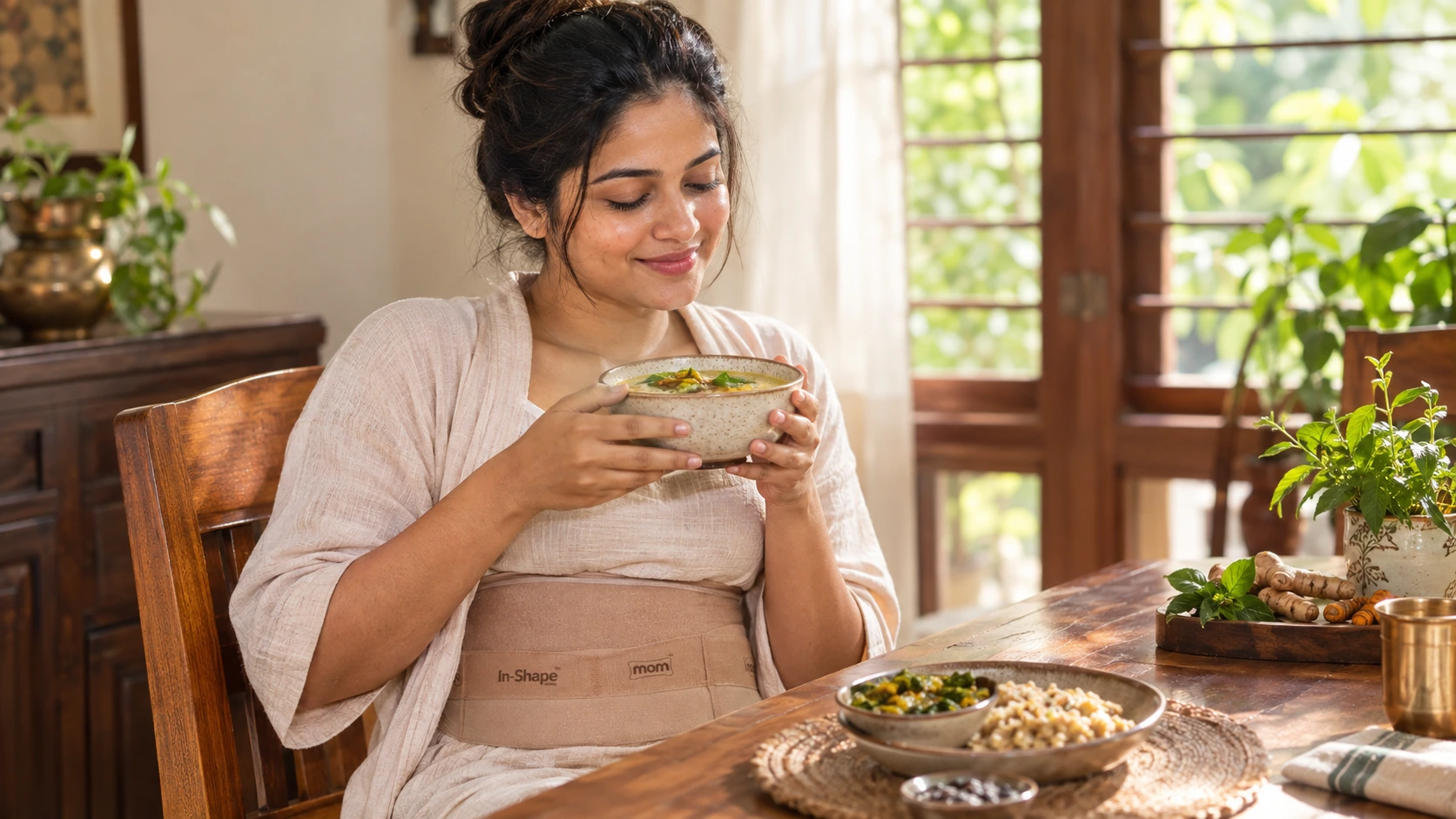

For generations, mothers have relied on tying a traditional cotton thorthu around their waists after childbirth. While this is a time-honored cultural practice, the reality is that a simple cloth often bunches up, slips down, and fails to provide the even pressure a healing body needs. That is why experts now strongly recommend medical-grade postpartum compression as a safer alternative.
Today, obstetricians and physiotherapists are shifting away from traditional cloth binding. Instead, they strongly recommend medical-grade postpartum compression to safely and effectively support your recovering core.
Here is a look at the biomechanics of postpartum healing and why modern abdominal support is a necessary upgrade for new mothers.
Traditional Thorthu vs. Medical-Grade Postpartum Compression
The intention behind tying a cloth around the abdomen is correct: your weakened core needs physical scaffolding. However, the execution has several major flaws that can actually hinder your recovery.
- Uneven Pressure Distribution: A tightly knotted thorthu applies intense, restrictive pressure right at the knot, while leaving the rest of the abdomen completely unsupported.
- Constant Slipping: As you stand up, sit down, or nurse your baby, the cloth inevitably rides up or slides down. Consequently, you spend half your day readjusting it.
- Lack of Breathability: Wrapping multiple layers of thick cotton traps body heat and sweat. This can easily lead to severe skin irritation or fungal infections, especially around a healing C-section scar.
Understanding Diastasis Recti and Core Biomechanics
During pregnancy, your growing uterus exerts immense outward pressure on your abdominal wall. To make room for the baby, the connective tissue running down the center of your stomach stretches, causing the left and right abdominal muscles to separate. This medical condition is known as Diastasis Recti.
Healing this separation requires more than just time. Your muscles need consistent, structural support that brings them back together gently. Because a traditional cloth cannot provide structured, 360-degree support, it does very little to actively heal separated muscles. In some cases, tying a cloth too tightly around the waist can force internal pressure downward, which weakens the pelvic floor.
Why Doctors Choose Medical-Grade Postpartum Compression
Modern medicine offers a safer, smarter solution. Here is why healthcare professionals advise transitioning from a thorthu to a structured abdominal binder:
1. Targeted, 360-Degree Support
A specialized binder is designed to mimic the natural function of your abdominal wall. It applies even, consistent compression across your entire torso. This gentle “hugging” mechanism supports the lower back, helps retract the stretched uterus, and encourages the separated abdominal muscles to close safely.
2. Pain Relief and Posture Correction
New mothers spend countless hours hunched forward while breastfeeding or rocking their baby. A structured belt acts as an external spine, physically preventing you from slouching. Furthermore, whether you are resting at home or taking a bumpy car ride for a pediatrician visit across Kottayam, Pathanamthitta, or Alappuzha, this rigid support acts as a shock absorber, drastically reducing back pain.
3. Superior Comfort and Climate Control
Unlike a bulky cloth, modern belts are crafted from thin, moisture-wicking materials. This means you get superior core support without the suffocating heat, making it an essential tool for managing your postpartum recovery in summer.
Upgrade Your Healing Journey with Medical-Grade Postpartum Compression
You do not have to choose between honoring your postpartum resting period and embracing modern medical science. By replacing the outdated thorthu with the safe, even support of the In-Shape Mom belt,
you are giving your body the exact biomechanical scaffolding it needs to heal faster and stronger.
Take the guesswork out of your recovery. Give your core the medical-grade support it deserves so you can focus entirely on enjoying those precious early days with your baby.