
During pregnancy, your abdominal wall experiences immense pressure to accommodate your growing baby. While conditions like Diastasis Recti are widely discussed, many new mothers are entirely unprepared for another common side effect of this structural strain: a postpartum umbilical hernia.
If you have noticed a tender, lingering bulge near your belly button that worsens when you lift your baby or cough, you may be experiencing a small hernia. Understanding why this happens and how to manage the physical load on your core is crucial for a safe fourth-trimester recovery.
What is a Postpartum Umbilical Hernia?
An umbilical hernia occurs when a part of your intestine or fatty tissue pokes through a weak spot in the abdominal muscles near your navel (the umbilicus).
During pregnancy, the linea alba (the connective tissue running down the center of your stomach) stretches and thins. The area directly behind the belly button is naturally one of the thinnest points in this muscular wall. The continuous outward pressure of gestation can cause this specific area to tear slightly, allowing tissue to push through. Without proper management, a postpartum umbilical hernia can cause ongoing discomfort and delay your physical recovery.
Common Signs of a Postpartum Umbilical Hernia
Because your core feels universally weak after childbirth, it can be difficult to distinguish between normal postpartum swelling and a hernia. Look for these specific indicators:
- A Visible Bulge: A distinct, soft lump directly on or adjacent to your belly button.
- Pressure-Triggered Pain: The bulge becomes more prominent or painful when you engage your core—such as when laughing, coughing, sneezing, or having a bowel movement.
- Tenderness to the Touch: The area around your navel feels highly sensitive or aches dully at the end of a long, active day.
3 Essential Steps to Protect Your Core
While severe hernias require surgical intervention, many mild cases can be managed and symptoms minimized by adopting strategic, core-protective habits during your postpartum journey.
1. Avoid Heavy Lifting and Straining
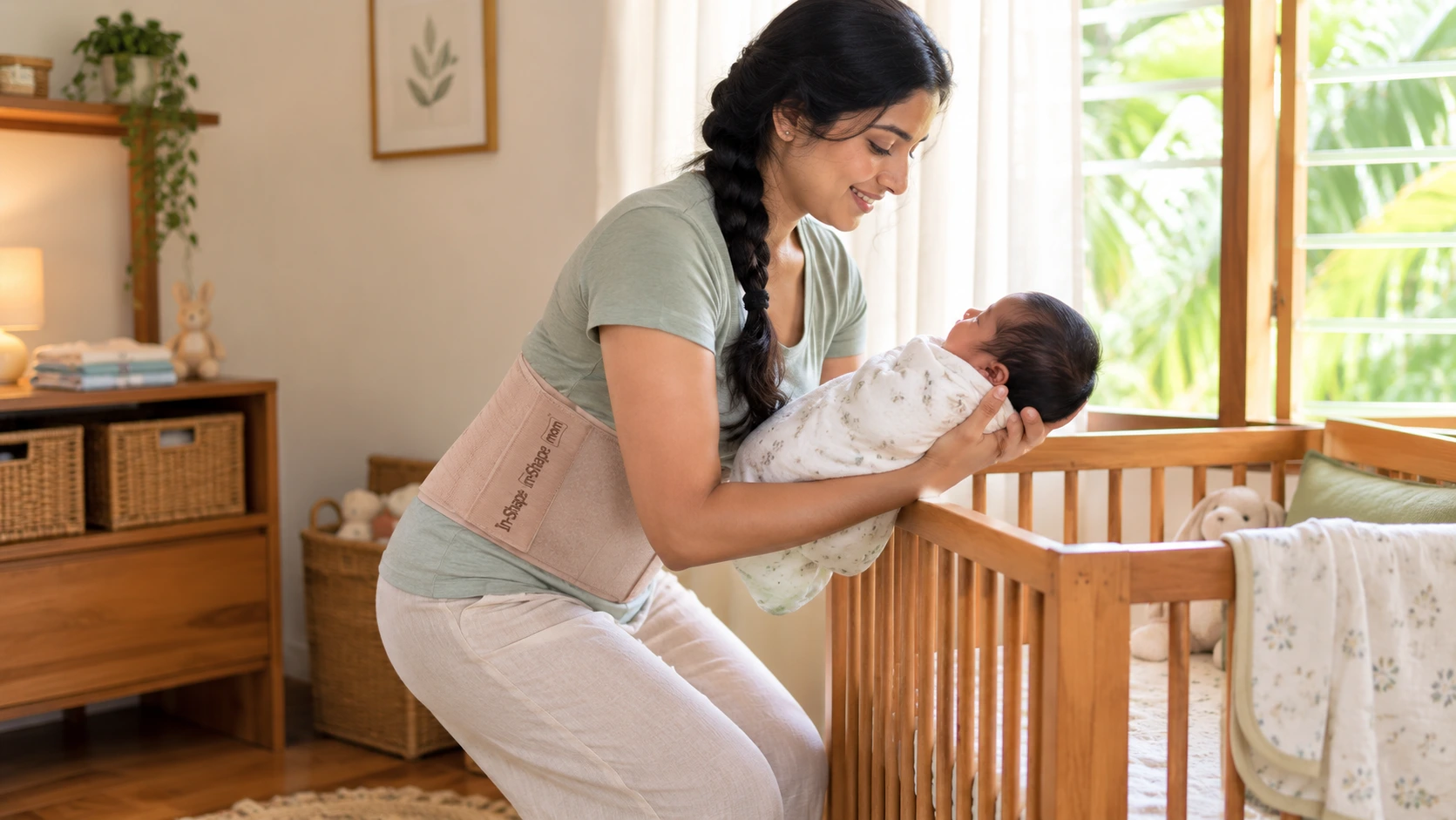
The most important rule for managing a postpartum umbilical hernia is to stop increasing intra-abdominal pressure. Avoid lifting anything heavier than your baby. When picking up your newborn, bend at the knees, keep them close to your chest, and exhale as you lift to naturally draw your core inward.
2. Utilize Medical-Grade Core Support
Your abdominal wall is structurally compromised and needs an external anchor. Wearing a supportive garment like the In-Shape mom postpartum belt is highly recommended. By providing horizontal compression, the belt physically supports the weakened connective tissue, minimizes the outward pressure on your belly button, and relieves pain during daily movements.
3. Rebuild with Deep Core Breathing
Avoid traditional crunches or planks, which will push the hernia further outward. Instead, focus on gentle diaphragmatic breathing to slowly re-engage the transverse abdominis, effectively creating a natural corset of strength behind your abdominal wall.
When to Seek Emergency Medical Care
While a postpartum umbilical hernia is often manageable, you must consult a doctor immediately if the bulge becomes hard, changes to a dark red or purple color, or is accompanied by severe pain, nausea, and vomiting. These are signs of a “strangulated” hernia, which requires immediate medical attention.
Support Your Healing Body Safely
Your midsection underwent a profound transformation. By recognizing the symptoms of a postpartum umbilical hernia and applying mindful movement and external support, you can comfortably navigate your recovery.
Give your weakened core the structural stability it craves. Discover the science-backed design of the In-Shape mom recovery belt at In-Shape Global.