
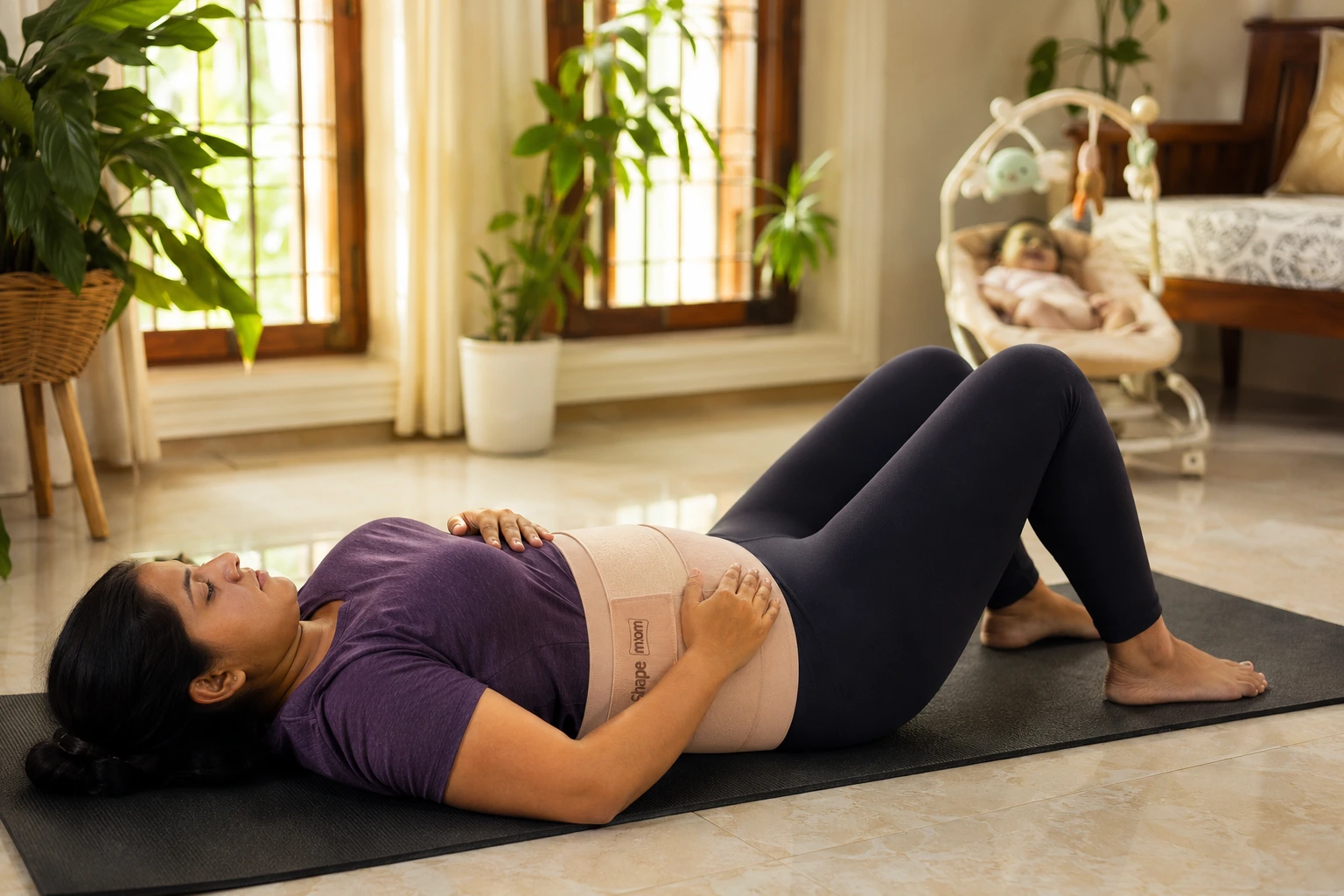
If you are a few months postpartum and still feeling a lingering disconnect with your midsection—or if you are experiencing lower back pain and a persistent “pooch” that doesn’t seem to respond to diet or exercise—you are not alone. During pregnancy, your body performs a miraculous physical feat, expanding to make room for a growing baby. However, this rapid expansion often leads to a common but rarely discussed condition: Diastasis Recti.
Rebuilding your core after childbirth requires patience, the right physical support, and a complete rethinking of what “ab workouts” look like. Rushing back into traditional exercises can actually make the condition worse. Here is everything you need to know about identifying abdominal separation and safely restoring your postpartum core strength.
What is Diastasis Recti?
Diastasis Recti is the partial or complete separation of the rectus abdominis—the “six-pack” muscles that meet at the midline of your stomach. During pregnancy, the connective tissue joining these muscles (the linea alba) stretches and thins out to accommodate your growing uterus.
After childbirth, this tissue often remains stretched, leaving a visible gap between your abdominal muscles. While a small amount of separation is normal and often resolves on its own, a gap of more than two finger-widths that persists for months postpartum requires intentional rehabilitation.
Common symptoms of abdominal separation include:
- A visible bulge or “coning” down the center of your stomach when you sit up or cough.
- Persistent lower back pain or pelvic floor dysfunction.
- Poor posture and a feeling of “weakness” or instability in your midsection.
- Urine leaking when you sneeze, laugh, or jump.
How to Perform a Diastasis Recti Self-Check
You can easily check for abdominal separation from the comfort of your own bed. If you are less than six weeks postpartum, give your body time to heal before stressing over the gap. If you are past the six-week mark, follow these steps:
- Lie flat on your back with your knees bent and your feet flat on the floor.
- Place your fingers flat just above your belly button, pointing down toward your pelvis.
- Gently lift your head and neck off the floor slightly, as if doing a mini-crunch. You should feel your abdominal muscles tighten.
- Press your fingers gently into your midline. See how many fingers fit into the gap between the left and right sides of the muscle.
- Repeat the test just below the belly button.
If you can fit two or more fingers into the gap, or if the tissue feels very soft and squishy rather than taut, you likely have Diastasis Recti.
Safe vs. Unsafe Core Movements Postpartum
The biggest mistake new mothers make is trying to close the abdominal gap with traditional core exercises. Putting outward pressure on a compromised linea alba will only stretch the connective tissue further.
Movements to Avoid
Avoid exercises that cause your stomach to bulge or “cone” outward, including:
- Crunches, sit-ups, and standard planks.
- Heavy lifting that causes you to hold your breath and bear down.
- Twisting movements like Russian twists or bicycle crunches.
- Sitting straight up out of bed (always roll to your side and push up with your arms instead).
Safe Core Rehabilitation Exercises
Focus on exercises that engage your transverse abdominis (your deepest core muscle that acts like a natural corset) and your pelvic floor.
- Diaphragmatic Breathing: Breathe deeply into your ribs and belly. As you exhale, gently pull your belly button in and up toward your spine, engaging your pelvic floor simultaneously.
- Heel Slides: Lie on your back with your knees bent. Engage your core using the breathing technique above and slowly slide one heel out until your leg is straight, then slowly slide it back.
- Glute Bridges: Lie on your back, knees bent. Squeeze your glutes and lift your hips off the floor, keeping your ribs tucked and your core engaged.
The Role of External Postpartum Support
While physical therapy and mindful breathing are essential, your weakened core needs external support during those first few vulnerable months. Navigating daily mom tasks—lifting car seats, carrying the baby, and pushing strollers—puts immense strain on a recovering abdomen.
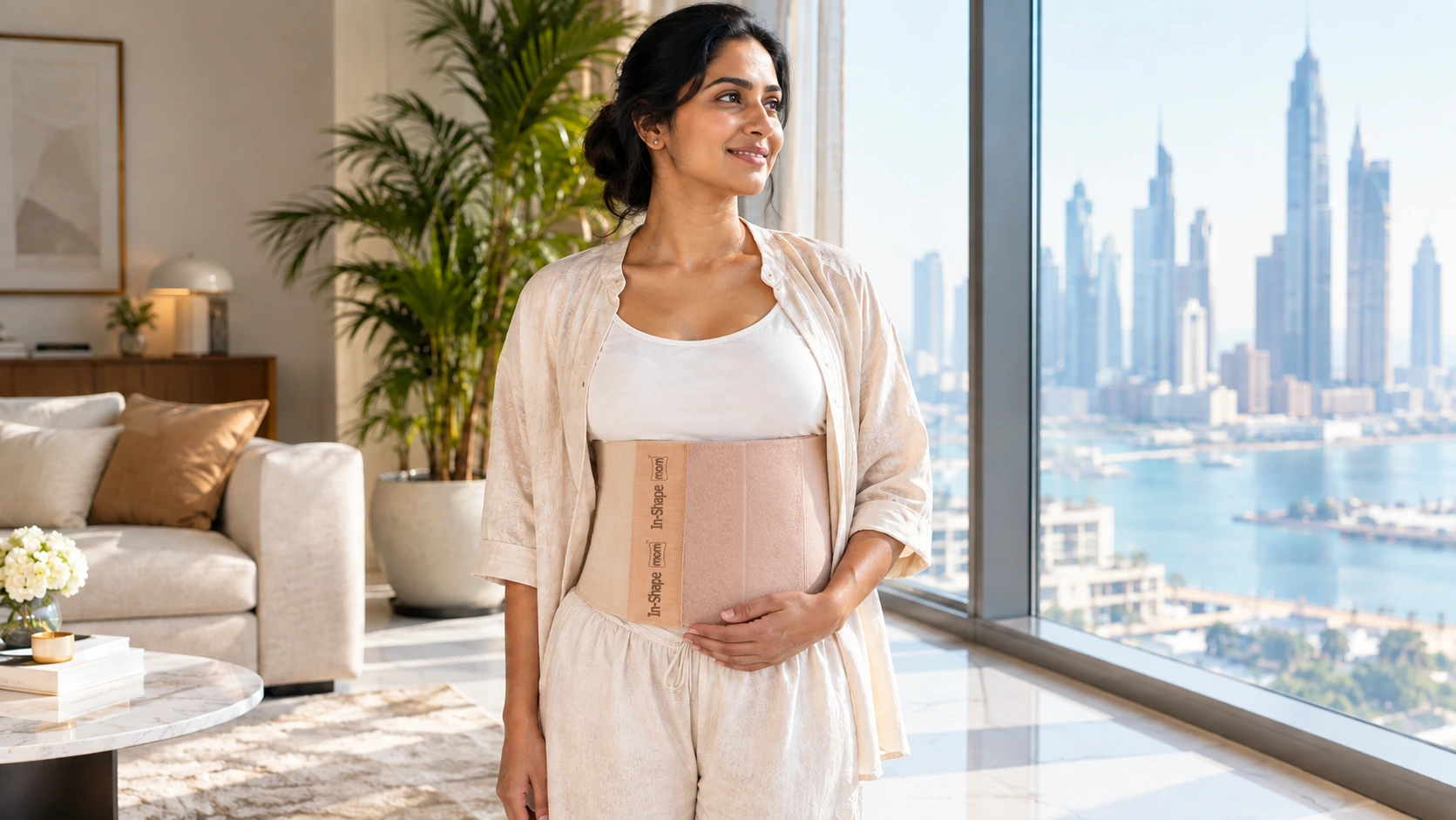
Wearing a high-quality postpartum abdominal binder, like the In-Shape Mom Postpartum Abdominal Binder, provides critical stabilization. A binder gently compresses the abdominal wall, taking the pressure off the stretched linea alba so the connective tissue can heal safely. It also provides vital lower back support and acts as a tactile reminder to maintain good posture and keep your core engaged throughout the day.
Recovery is not a race. Your body spent nine months stretching and shifting to bring life into the world, and it will take time to knit those foundational muscles back together. Start slow, prioritize deep breathing, and celebrate the incredible resilience of your postpartum body.
Have you tried checking for abdominal separation using the method above, or are you looking for more specific guidance on postpartum exercise?


1 Comment
[…] after decent sleep? You might have low iron stores. This is especially common if you experienced heavy lochia (postpartum bleeding) or […]