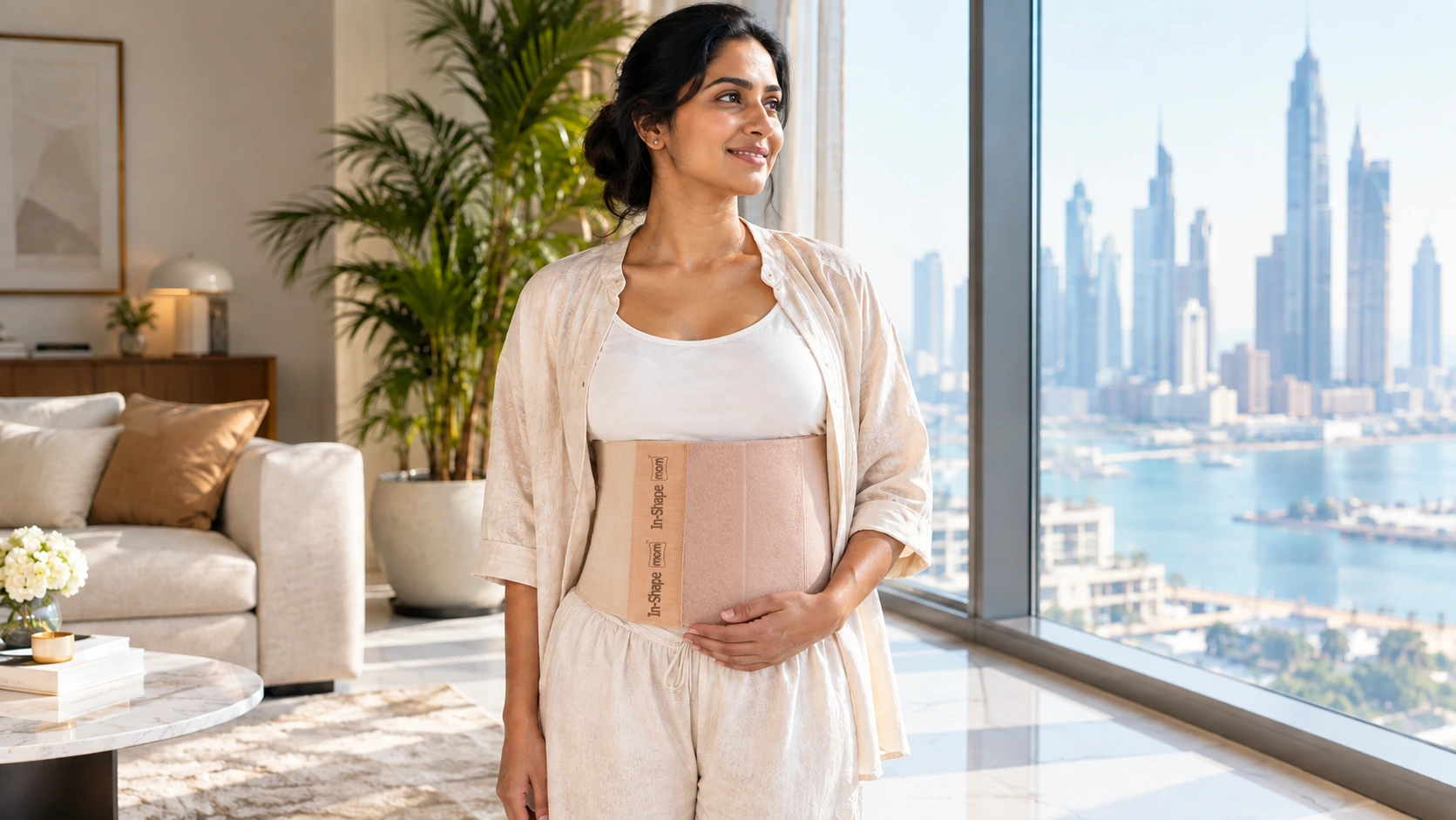

The transition into motherhood is a physical marathon. After nine months of your body expanding to accommodate new life, the “deflation” that happens after birth can feel strange, with many women describing a sensation of their internal organs “shifting” or their core feeling “empty”. During this time, your wardrobe needs to do more than just look good—it needs to support your recovery while making you feel like yourself again.
The Foundation of Postpartum Style
True postpartum fashion starts from the inside out. Your abdominal muscles (the rectus abdominis) have stretched and may have separated—a condition known as Diastasis Recti.
Before you choose your outfit, consider the foundation. A high-quality postpartum abdominal binder is a vital tool for recovery that serves three medical purposes:
- Sustained Compression: Encourages the uterus to contract back to its original size.
- Structural Support: Provides an external “wall” for your weakened core, reducing lower back pain and improving breastfeeding posture.
- Incision Stability: Protects the incision site for C-section moms, reducing pain during movement.
Choosing the Right Support
Unlike standard retail “belly bands” which are often cosmetic and non-breathable, a medical-grade option like the In-Shape Mom Post-Pregnancy Belt is an orthopedic abdominal suspender. Its ultra-thin construction makes it discreet under clothes, allowing you to wear your favorite postpartum outfits without bulk.
3 Essential Tips for Postpartum Dressing
1. Prioritize Breathable, Medical-Grade Fabrics
Postpartum hormones can lead to night sweats and skin sensitivity. Standard elastic binders often trap sweat, leading to rashes—especially near C-section incisions. Opt for clothing and support gear made from anti-microbial and anti-allergic medical fabric to keep your skin safe and comfortable all day.
2. Embrace the “Layering” Technique
Layering is a new mother’s best friend. Use a sleek, medical-grade binder as your base layer for core stability, then layer with:
- Button-down shirts: For easy nursing access.
- Flowing cardigans: To provide coverage and style.
- High-waisted leggings: These work perfectly with an abdominal binder to provide a smoothed silhouette and extra back support.
3. Focus on Internal Healing Over “Shapewear”
It is tempting to reach for standard shapewear to look slimmer, but these often lack the engineering required for physiological recovery. A medical-grade suspender focuses on internal healing, pelvic floor stability, and long-term core health. When you feel supported internally, your confidence naturally shines through your outfit.
Comparison: Support for Your Style
| Feature | Fashion Shapewear | In-Shape Mom Recovery Belt |
| Primary Goal | Cosmetic slimming | Physiological & core recovery |
| Material | Often synthetic/itchy | Anti-microbial & breathable |
| Visibility | Can be bulky | Ultra-thin & discreet |
| Medical Benefit | None | Supports Diastasis Recti & C-sections |
Finding Your Strength Again
Recovery is not a race, but giving your body the right foundation makes the journey smoother. You aren’t just looking for “fashion”; you are looking for a partner in your recovery. By combining stylish, loose-fitting pieces with professional-grade support, you can navigate early motherhood with comfort and grace.
Frequently Asked Questions about Postpartum Fashion & Recovery
1. Can I wear a postpartum abdominal binder under stylish clothes?
Yes. Unlike bulky retail waist trainers, a medical-grade postpartum abdominal binder like the In-Shape Mom belt features an ultra-thin, discreet design. It is specifically engineered to be invisible under high-waisted leggings, dresses, and professional attire, allowing you to prioritize recovery without sacrificing your style.
2. How does postpartum fashion differ for C-section recovery?
Dressing after a C-section requires a focus on incision protection. A high-quality binder provides a protective “external wall” that stabilizes the incision site. This reduces pain during daily movements—such as walking or laughing—allowing you to wear standard clothing more comfortably during the healing process.
3. Is it safe to wear an abdominal binder all day with sensitive skin?
It depends on the material. Standard elastic binders can trap moisture and cause rashes. To maintain skin health while staying stylish, choose a binder made from anti-microbial and anti-allergic medical fabric. This ensures the belt remains breathable and hygienic for all-day wear, even in warmer climates.
4. Does wearing a support belt help with Diastasis Recti while dressing?
Absolutely. During pregnancy, the abdominal muscles (rectus abdominis) stretch and separate. A medical-grade binder provides sustained compression that helps bring these muscles back together. This not only aids internal healing but also provides a smoother silhouette under your postpartum outfits.
5. How do I choose between “shapewear” and a medical recovery belt?
While shapewear is designed for temporary cosmetic slimming, it often lacks the structural engineering needed for health. A medical-grade suspender focuses on pelvic floor stability, internal organ support, and long-term core health. For true postpartum recovery, always choose a doctor-designed orthopedic tool like the In-Shape Mom belt over mass-market fitness bands.