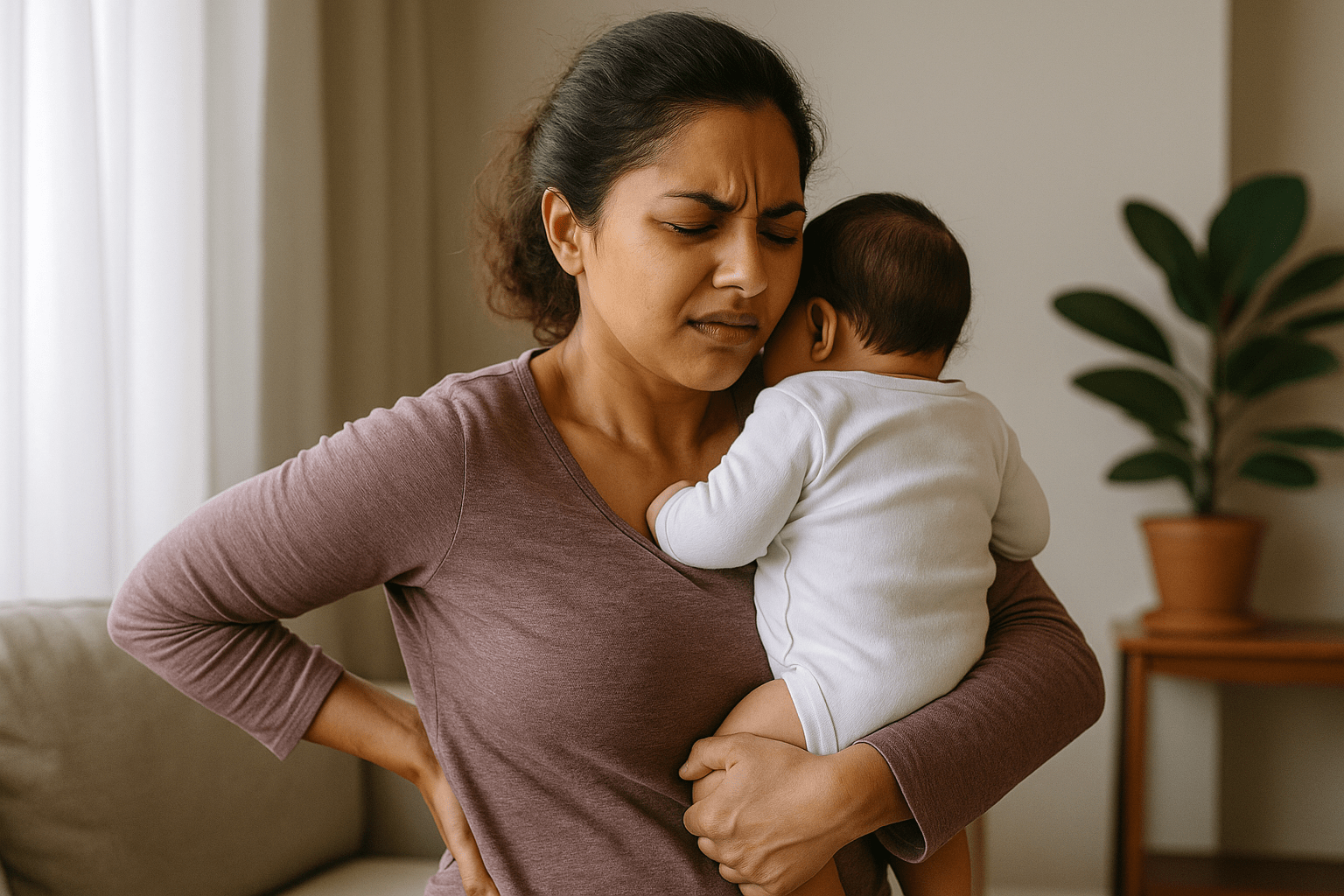
Becoming a mother is a life-changing experience—but it can also bring unexpected challenges. One of the most common complaints new moms face is postpartum back pain. Whether it’s a dull ache or sharp discomfort, back pain after delivery can make daily tasks—like feeding your baby, carrying them, or even getting up from bed—more difficult.
If you’re struggling with postpartum back pain, you’re not alone. Let’s explore why this happens and, more importantly, how you can find relief.
Why Does Postpartum Back Pain Happen?
During pregnancy and after delivery, your body goes through major changes:
- Weakened Core Muscles
Your abdominal muscles stretch during pregnancy, leaving your core weaker and less able to support your spine. - Hormonal Changes
A hormone called relaxin remains in your body for weeks after delivery. It loosens joints and ligaments—especially in your pelvis and lower back—leading to instability. - Lifting and Carrying Baby
New moms frequently bend, lift, and twist—whether during feeding, diaper changes, or carrying the baby. Repetitive strain on the lower back can trigger pain. - Poor Posture During Breastfeeding
Slouching during nursing or holding your baby can cause upper and lower back pain over time. - C-section Recovery
If you had a cesarean delivery, your healing abdominal muscles may struggle to support your back properly.
How To Get Relief from Postpartum Back Pain
Here are realistic and safe ways to ease your postpartum back pain:
1. Improve Your Posture
- Sit upright with your shoulders back and use a pillow for back support.
- Use a nursing pillow to raise your baby during feeds, so you don’t lean forward.
- Avoid slumping while scrolling on your phone during nursing!
2. Gentle Stretches and Exercises
- Start with pelvic tilts, cat-cow stretches, and bridges after your doctor gives you the green light.
- Postnatal yoga or physiotherapy-guided core strengthening can help you rebuild support around your spine.
- Walking daily, even for 15–20 minutes, can relieve stiffness.
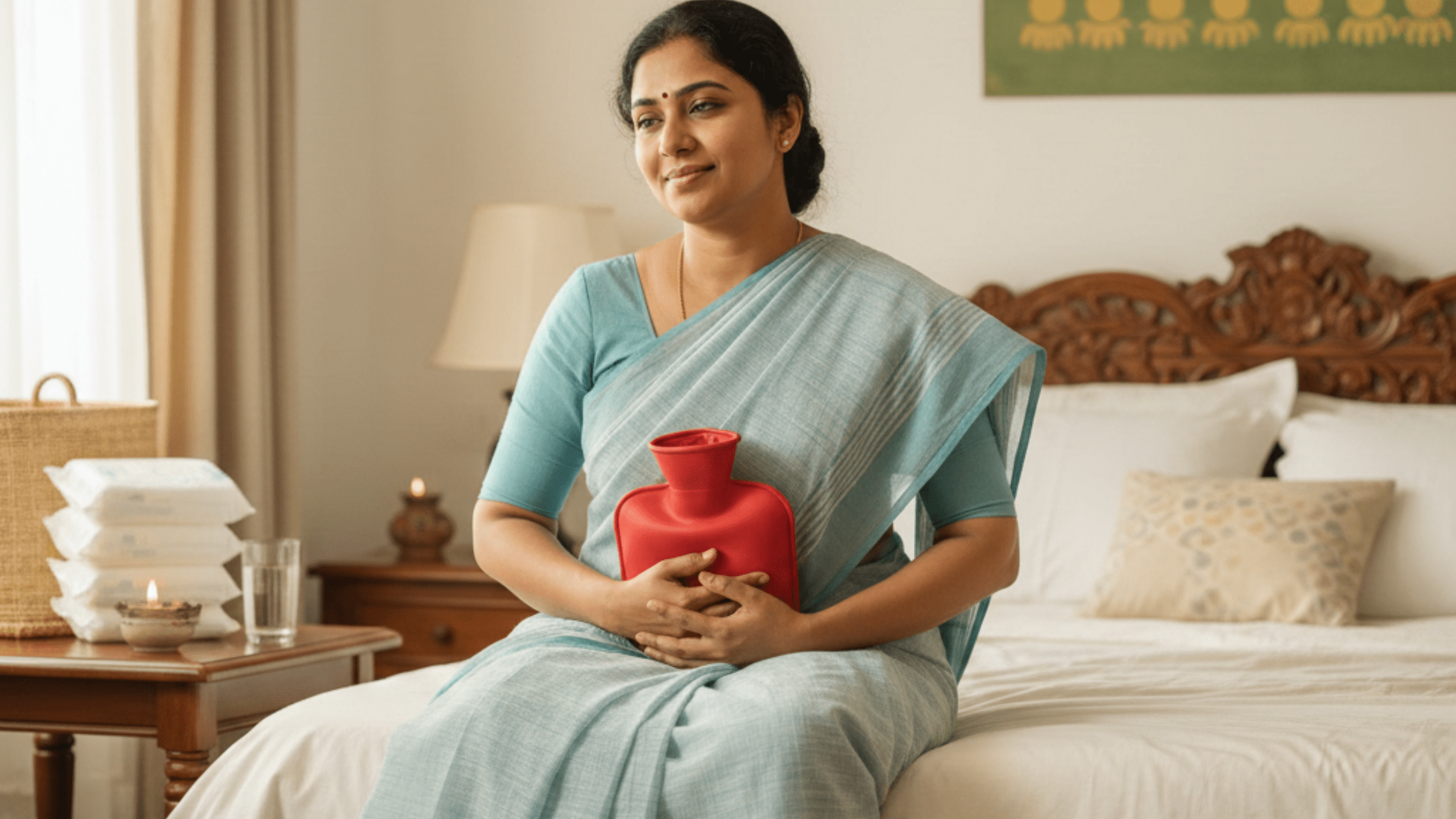
3. Use Heat Therapy
- Apply a warm compress or heating pad to your lower back.
- It relaxes tight muscles and improves blood flow.
4. Learn Safe Baby Lifting Techniques
- Bend your knees (not your waist) while picking up your baby.
- Keep them close to your body to reduce strain on your back.
5. Postnatal Massage
- A gentle postpartum massage by a trained therapist can relieve muscle tension.
- Especially beneficial for Kerala moms, where traditional postnatal care often includes full-body massages with warm oils.
6. Prioritize Rest and Sleep
- Sleep may feel impossible with a newborn, but try to rest when your baby naps.
- Poor sleep worsens inflammation and body pain.
7. Consult a Doctor if Pain Persists
- If pain lasts longer than 6–8 weeks, consult a physiotherapist or orthopedist.
- Avoid self-medicating with painkillers without medical advice, especially if breastfeeding.
Bonus Tips for Kerala Moms
- Consider traditional abhyanga massage (with warm medicinal oils) after delivery—it’s a well-loved practice in many Kerala households for postpartum healing.
- Local herbs like dashamoolam in hot compresses or oils can support recovery when used correctly under guidance.
- If you’re wearing a postpartum belt, ensure it’s not too tight—it should support, not squeeze.
Remember, Healing Takes Time
Postpartum recovery is not just about weight loss or belly tightening—it’s about regaining strength, balance, and well-being. Be kind to yourself. With consistent care and support, your back pain will ease—letting you enjoy motherhood with more comfort and confidence.
Thank you for reading!
Take care of your back—it’s the backbone of your motherhood journey.