Walking across the room, climbing stairs, or rolling over in bed should feel effortless, yet many new mothers experience a deep, lingering ache on the sides or front of their hips after childbirth. Dealing with postpartum hip pain during the fourth trimester can turn simple daily movements—like standing while rocking your newborn or stepping out of the car—into an exhausting challenge.
Understanding how pregnancy reshapes your pelvic mechanics and how to stabilize your joints allows you to relieve hip discomfort and rebuild balanced mobility safely.
Why Do Your Hips Ache After Childbirth?
During pregnancy, your body undergoes dramatic structural and hormonal adaptations to prepare for birth. As your belly expands forward, your pelvis tilts anteriorly, shifting your center of gravity and altering the angle of your hip sockets.
Following delivery, discomfort often persists due to three primary factors:
- Lingering Ligament Laxity: The hormone relaxin keeps the ligaments surrounding your hip joints and sacroiliac (SI) joints soft for months after birth, leaving your pelvis temporarily unstable.
- Gluteal Muscle Weakness: During pregnancy, your glutes lengthen and weaken while your hip flexors tighten. Without strong gluteal muscles to stabilize your femur, your hip joints absorb excessive friction during every step.
- One-Sided Baby Carrying: Resting your baby habitually on one hip pushes your pelvis out of neutral alignment, overloading the supporting joint and surrounding tendons.
Common Signs of Postpartum Hip Strain
Recognizing how pelvic instability shows up helps you modify your daily movement habits early:
- Outer Hip Tenderness: A dull ache or sharp pinching sensation on the outside of your hip, especially when lying on your side at night.
- Groin or Front-of-Hip Tightness: Stiffness when lifting your knee to put on shoes, climb stairs, or step into a bath.
- Clicking or Shifting Sensations: Feeling as though your hip or pelvis slightly pops or shifts when transitioning from sitting to standing.
4 Steps for Postpartum Hip Pain Relief
Restoring pain-free hip movement requires external pelvic stabilization, gentle glute reactivation, and balanced daily habits.
1. Stabilize Your Pelvis with External Core Compression
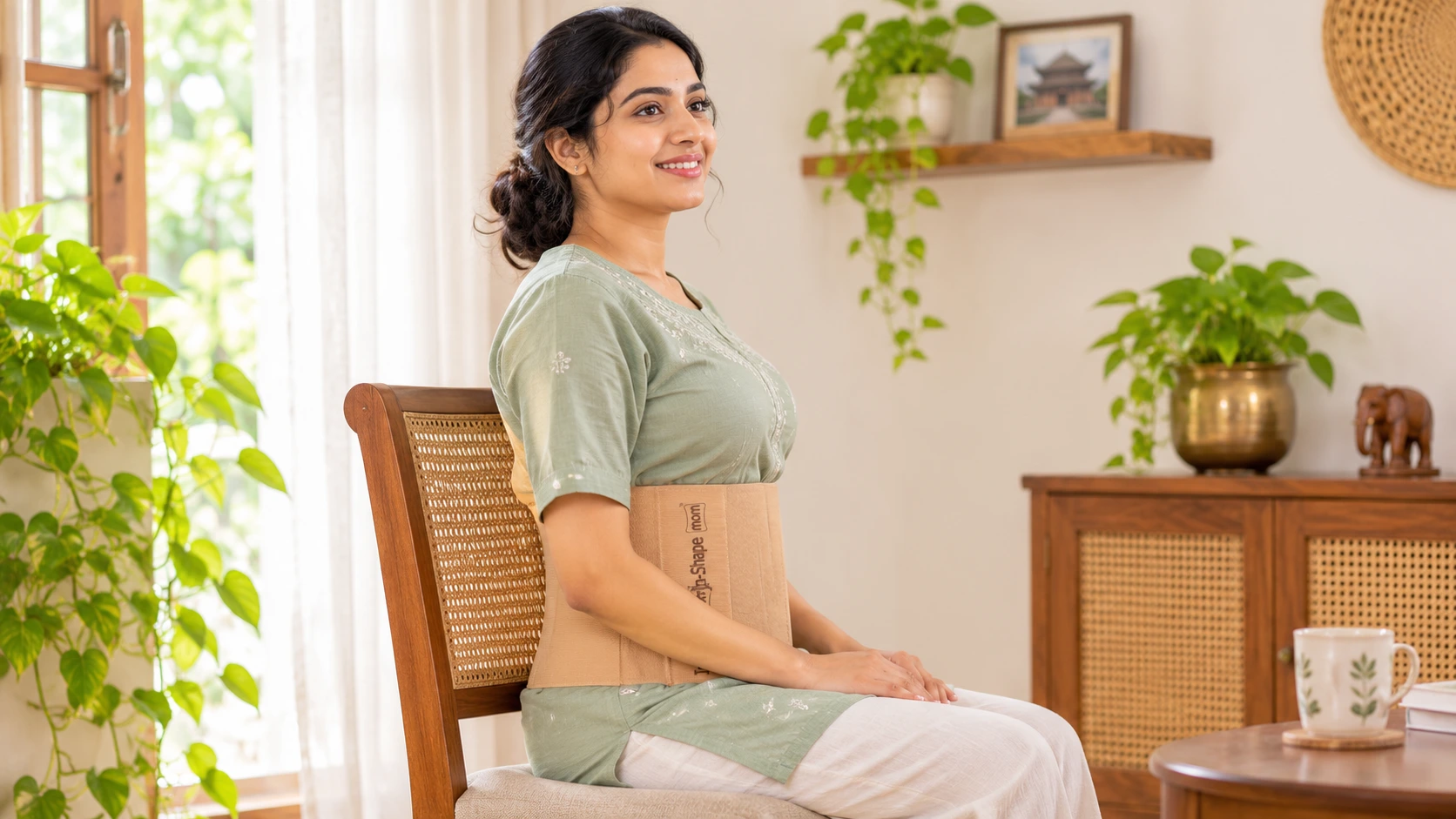
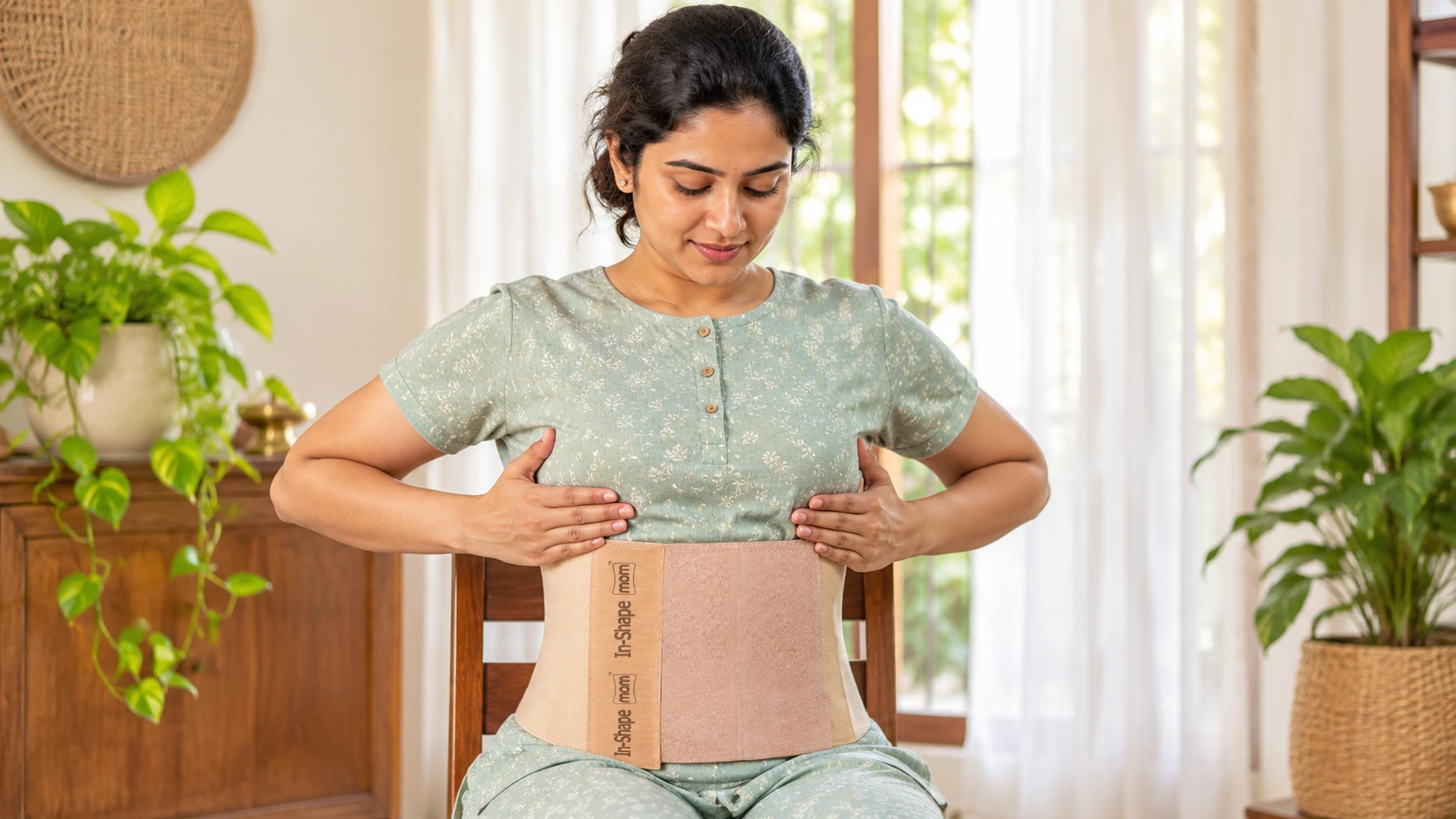
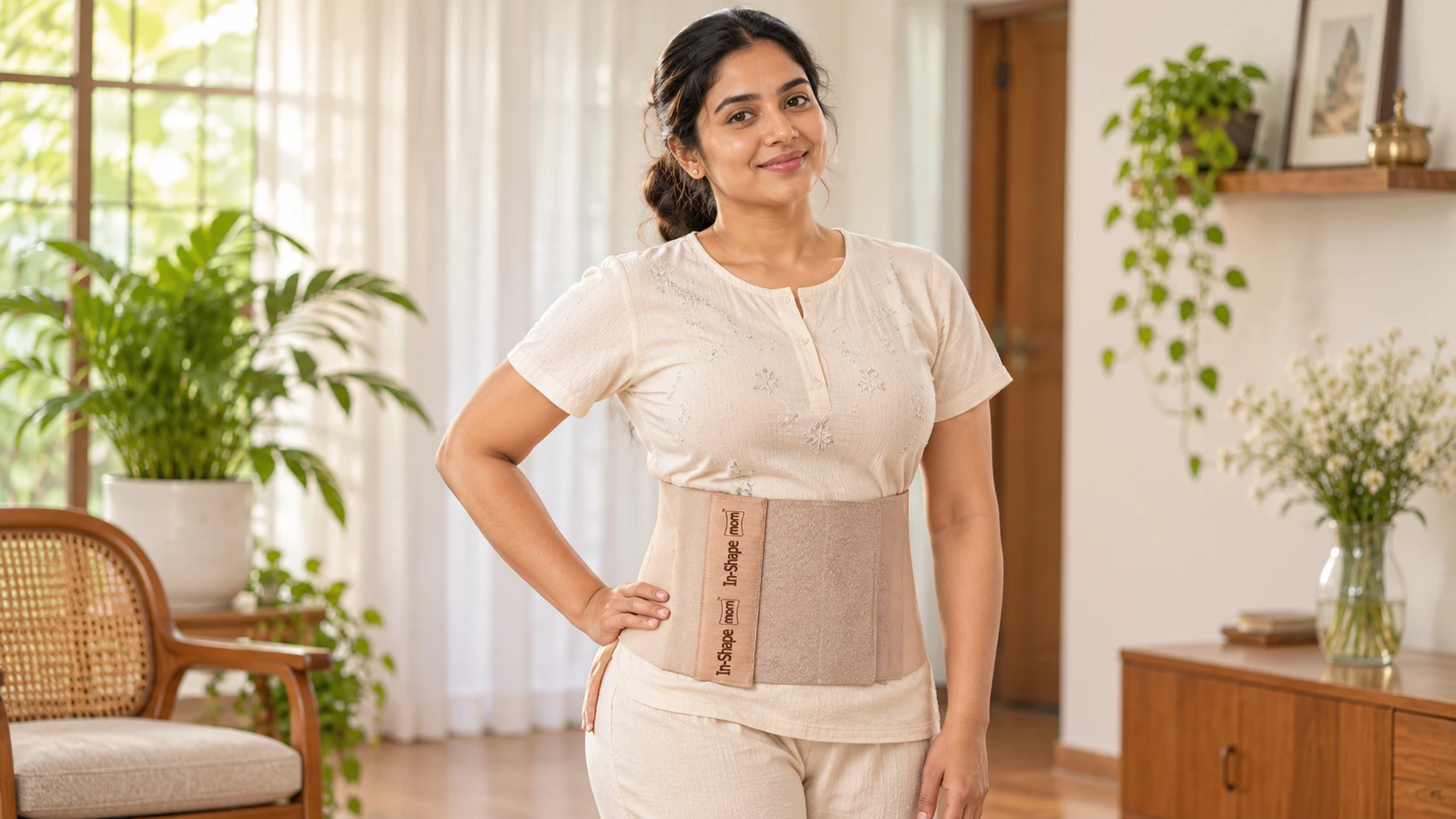
Your hips and abdominal wall form a continuous kinetic chain. When your front core muscles are slack, your pelvis tilts unevenly, straining your hip sockets. Wearing an anatomical binder like the In-Shape mom postpartum belt delivers consistent horizontal compression around your lower trunk. This external support anchors your abdominal wall, encourages a neutral pelvic tilt, and reduces mechanical stress on your hip joints during active hours.
2. Balance Your Baby-Carrying Habits
Avoid jutting one hip out to act as a shelf for your baby. Instead, stand tall with your weight distributed evenly across both feet, and alternate which arm you use to cradle your newborn. When walking longer distances, use a well-fitted, ergonomic baby carrier that distributes weight symmetrically across both shoulders and hips.
3. Reactivate Weak Glutes with Gentle Clamshells
Rebuilding strength in your outer hip muscles (gluteus medius) protects your hip joints from collapsing inward. Lie on your side with your knees bent at a 45-degree angle and a pillow between your ankles. Keeping your feet together and your pelvis steady, exhale as you slowly lift your top knee a few inches, then lower it with control. Perform 8 to 10 slow repetitions on each side.
4. Support Your Hips While Side-Sleeping
Lying directly on a hard mattress without proper alignment pulls your top leg downward, twisting your pelvis and straining your outer hip tendons. Place a firm, thick pillow between both your knees and ankles whenever you sleep on your side to keep your hips stacked in a neutral, pain-free line.
Reclaiming Balanced Mobility Safely
Recovering from childbirth means giving your ligaments time to firm up while gently retraining your stabilizing muscles. By evening out your posture, strengthening your glutes, and supporting your midsection with breathable compression, you can relieve postpartum hip pain and move through early motherhood with comfort.
Give your pelvis and core the anatomical stability they need to heal. Explore the In-Shape mom recovery belt collection at In-Shape Global.