Sitting down to nurse your baby or rest after childbirth should bring relief, yet for many new mothers, sitting triggers a sharp, deep ache right at the base of the spine. Experiencing postpartum tailbone pain—medically known as coccydynia—can turn basic daily routines like feeding, driving, or resting on a sofa into a painful ordeal.
Understanding how childbirth impacts the base of your spine and how to relieve downward pressure allows you to sit comfortably and heal safely during the fourth trimester.
Why Does Your Tailbone Hurt After Childbirth?
Your tailbone (coccyx) sits at the very bottom of your spine and serves as an anchor point for your pelvic floor muscles and ligaments. During pregnancy, the hormone relaxin softens the cartilage and ligaments surrounding the coccyx so it can flex backward to make room for your baby during delivery.
After birth, soreness often lingers due to:
- Mechanical Strain During Delivery: The baby’s passage through the birth canal can bruise, hyperextend, or slightly shift the tailbone backward.
- Pelvic Floor Tension: Because your pelvic floor muscles attach directly to the coccyx, tight or spasming pelvic muscles pull continuously on the tailbone when you sit.
- Slumped Feeding Posture: Rolling backward onto your tailbone while nursing on a soft couch places direct body weight onto the bruised bone instead of your sit-bones (ischial tuberosities).
Common Signs of Postpartum Coccydynia
Recognizing the symptoms of tailbone strain helps you adjust your seating habits before discomfort worsens:
- Sharp Pain When Sitting: A distinct ache or stabbing sensation at the base of the spine, especially on hard or overly soft surfaces.
- Pain When Standing Up: A sudden flare of discomfort during the transition from sitting to standing.
- Lower Pelvic Tenderness: Sensitivity around the lower glutes or perineal area when leaning backward.
4 Steps for Postpartum Tailbone Pain Relief
Easing pressure on your coccyx requires intentional seating mechanics, gentle pelvic floor relaxation, and balanced trunk support.
1. Shift Your Weight Onto Your Sit-Bones
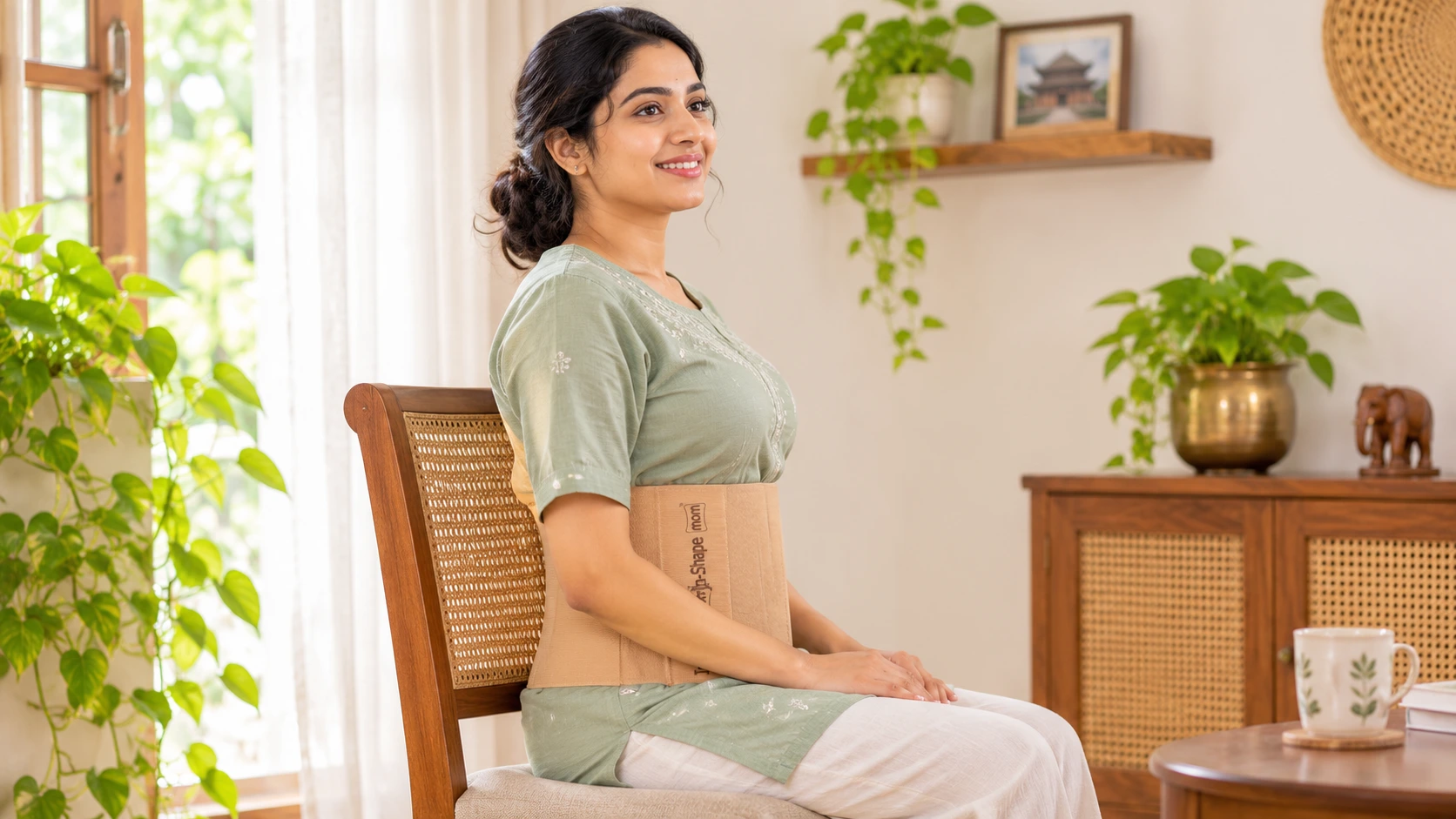
Never tuck your pelvis under or lean back onto your tailbone while nursing. Sit tall on a firm chair and hinge slightly forward from your hips so your weight rests evenly on your two bony sit-bones. Using a U-shaped or wedge-shaped cushion with a rear cutout suspends your tailbone in mid-air, eliminating direct surface pressure.
2. Support Your Trunk with Ergonomic Core Compression
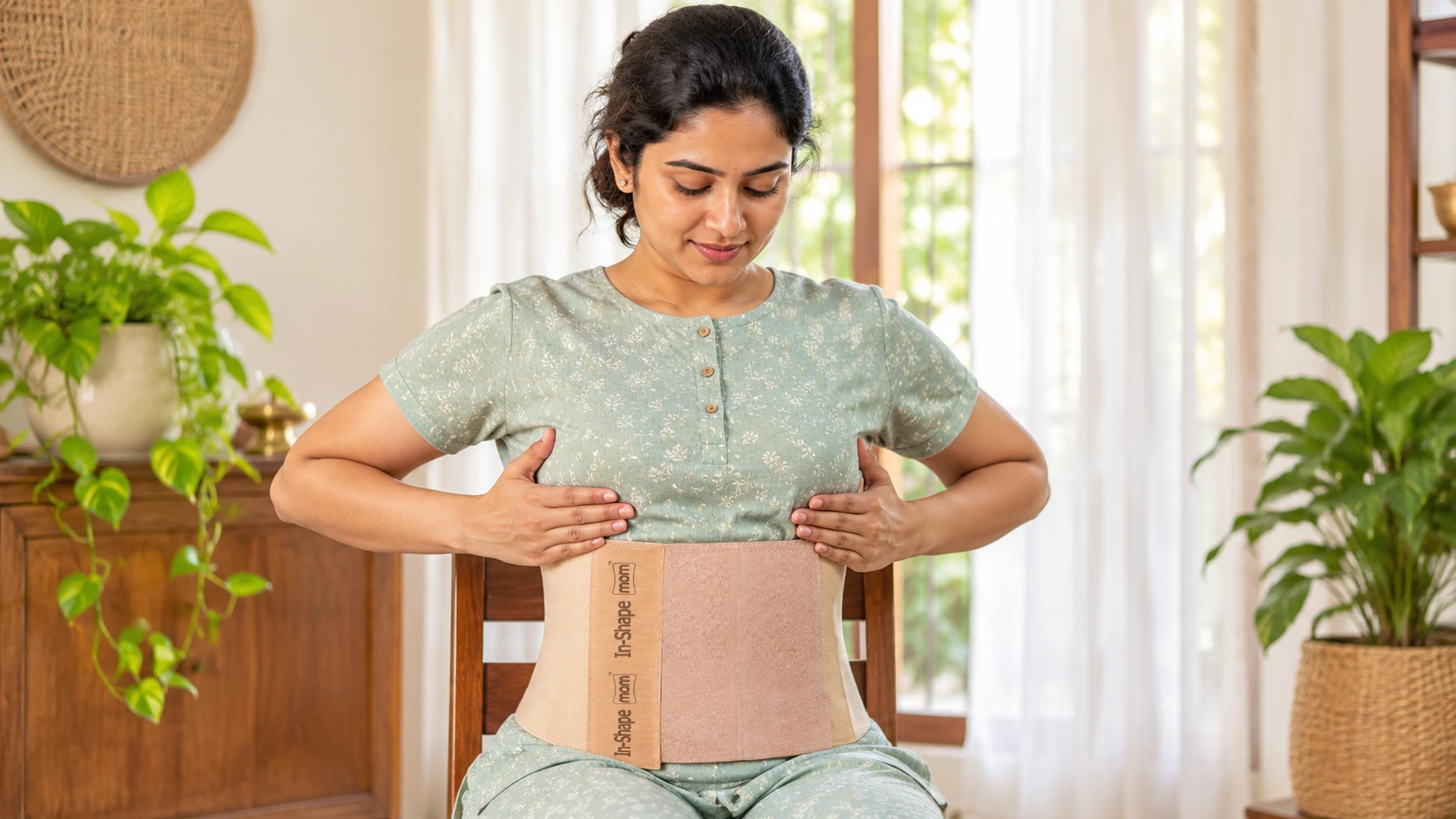
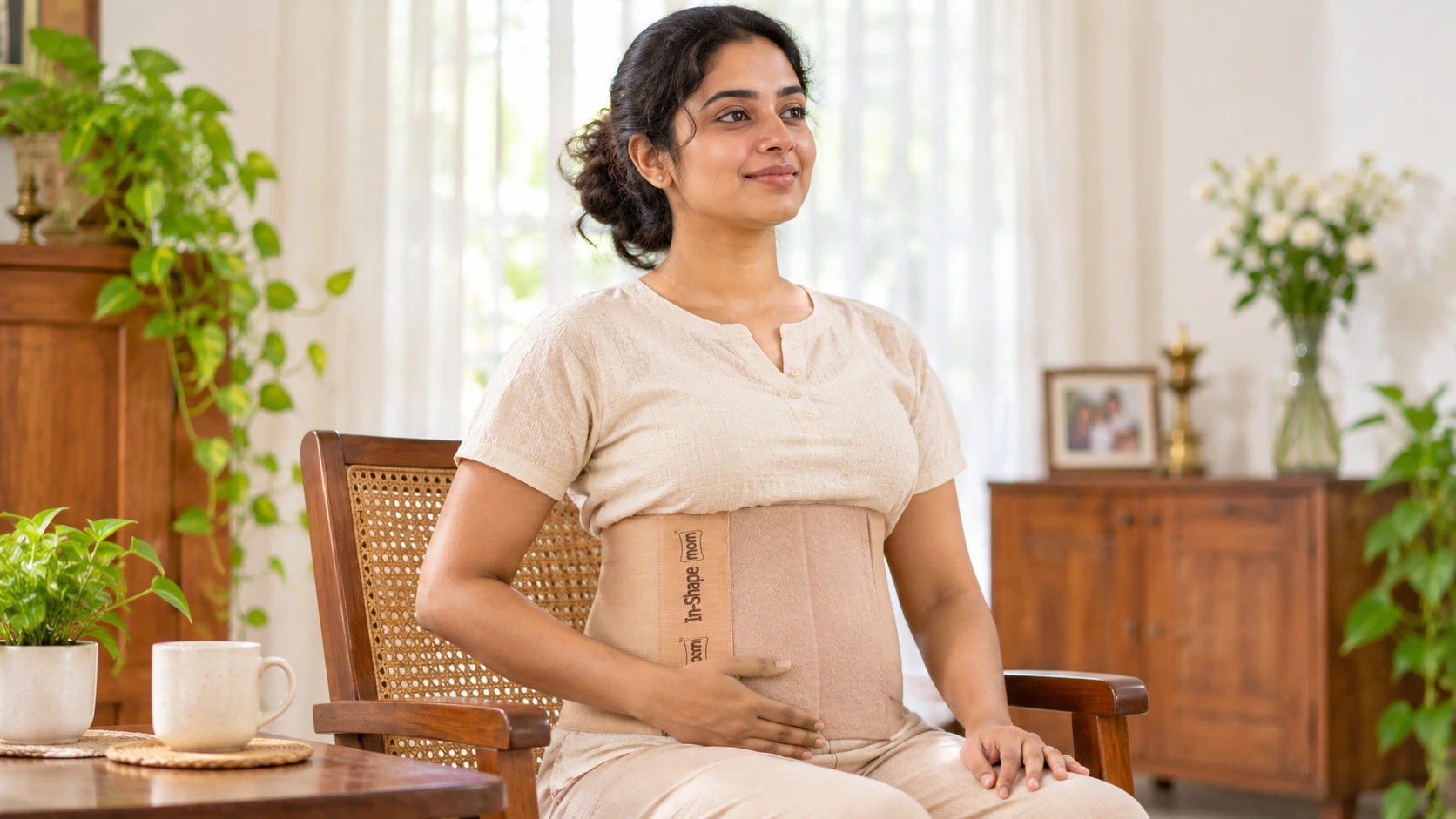
When your abdominal wall is overstretched, your torso naturally collapses backward into a slump—driving your body weight straight onto your tailbone. Wearing an anatomical binder like the In-Shape mom postpartum belt delivers gentle horizontal compression around your midsection. This external support stabilizes your core wall, encourages an upright rib-over-pelvis stack, and prevents the backward slouch that triggers postpartum tailbone pain.
3. Release Tight Pelvic Floor Muscles
Avoid doing aggressive Kegel exercises if your tailbone hurts, as squeezing already tight muscles increases tension on the coccyx. Instead, practice reverse Kegels through deep diaphragmatic breathing: inhale slowly through your nose and visualize your pelvic floor muscles softening, widening, and dropping gently away from your tailbone.
4. Apply Gentle Warmth and Side-Lying Rest
Warm compresses or a warm sitz bath soothe spasming muscles around the lower pelvis and promote healing blood flow. When feeding or resting at home, alternate between upright supported sitting and side-lying positions to give your spine complete relief from gravity.
Sitting Comfortably Through Your Recovery
Tailbone soreness after delivery is a sign that your lower pelvis needs protection and gentler mechanics while ligaments regain their stability. By adjusting how you sit, relaxing your pelvic floor, and supporting your upright posture with breathable core compression, you can enjoy pain-free feeding sessions and heal with confidence.
Protect your spinal alignment and support your core safely throughout the fourth trimester. Explore the In-Shape mom recovery belt collection at In-Shape Global.