Many mothers notice that their lower ribcage looks wider or feels noticeably flared outward after childbirth, even months into their recovery. Known as postpartum rib flare, this common structural shift happens when the lower ribs remain stuck in an elevated, expanded position after carrying a baby to full term.
Understanding why your ribcage changes shape during pregnancy and how to gently restore optimal alignment helps improve breathing mechanics, reduce upper back tension, and support deep core healing.
Why Does the Ribcage Expand During Pregnancy?
As your baby grows upward into your upper abdomen during the third trimester, your expanding uterus pushes directly against your diaphragm and lower ribcage. To create space, your lower ribs widen outward by several centimeters, and the angle between your ribs increases.
Following delivery, the baby is no longer pushing upward, yet the ribcage often stays flared because:
- Weakened Upper Abdominals: Your external obliques and upper rectus abdominis—the muscles responsible for drawing the ribs downward and inward—are overstretched and temporarily fatigued.
- Tight Upper Back Muscles: Compensating for a shifting center of gravity often causes tight lower back muscles to pull the pelvis forward and push the lower ribs out.
- Shallow Chest Breathing: Stress and posture habits frequently keep mothers breathing shallowly into their upper chest rather than utilizing full diaphragmatic expansion.
Common Signs of Postpartum Rib Flare
Recognizing ribcage alignment shifts helps you address lingering upper core tension:
- Protruding Lower Ribs: Your bottom ribs visibly stick out forward, especially when lying flat on your back or reaching your arms overhead.
- Bra Band Tightness: Your pre-pregnancy bras or tops feel tight around the underbust even after losing pregnancy fluid weight.
- Mid-Back Stiffness: Persistent aching between your shoulder blades or right behind your bra strap line.
4 Steps to Address Postpartum Rib Flare
Restoring your ribcage to its natural resting position involves retraining your breathing pattern, releasing tight back muscles, and supporting your abdominal wall.
1. Practice 360-Degree Exhale Breathing
Your breath is the primary driver of ribcage mobility. Lie on your back with your knees bent and feet flat. Place your hands on the sides of your lower ribs. Inhale gently through your nose, letting your ribs expand sideways into your hands. Then, exhale slowly and fully through pursed lips, feeling your lower ribs gently knit downward and inward toward your pelvis.
2. Support Your Core Wall with Gentle Compression
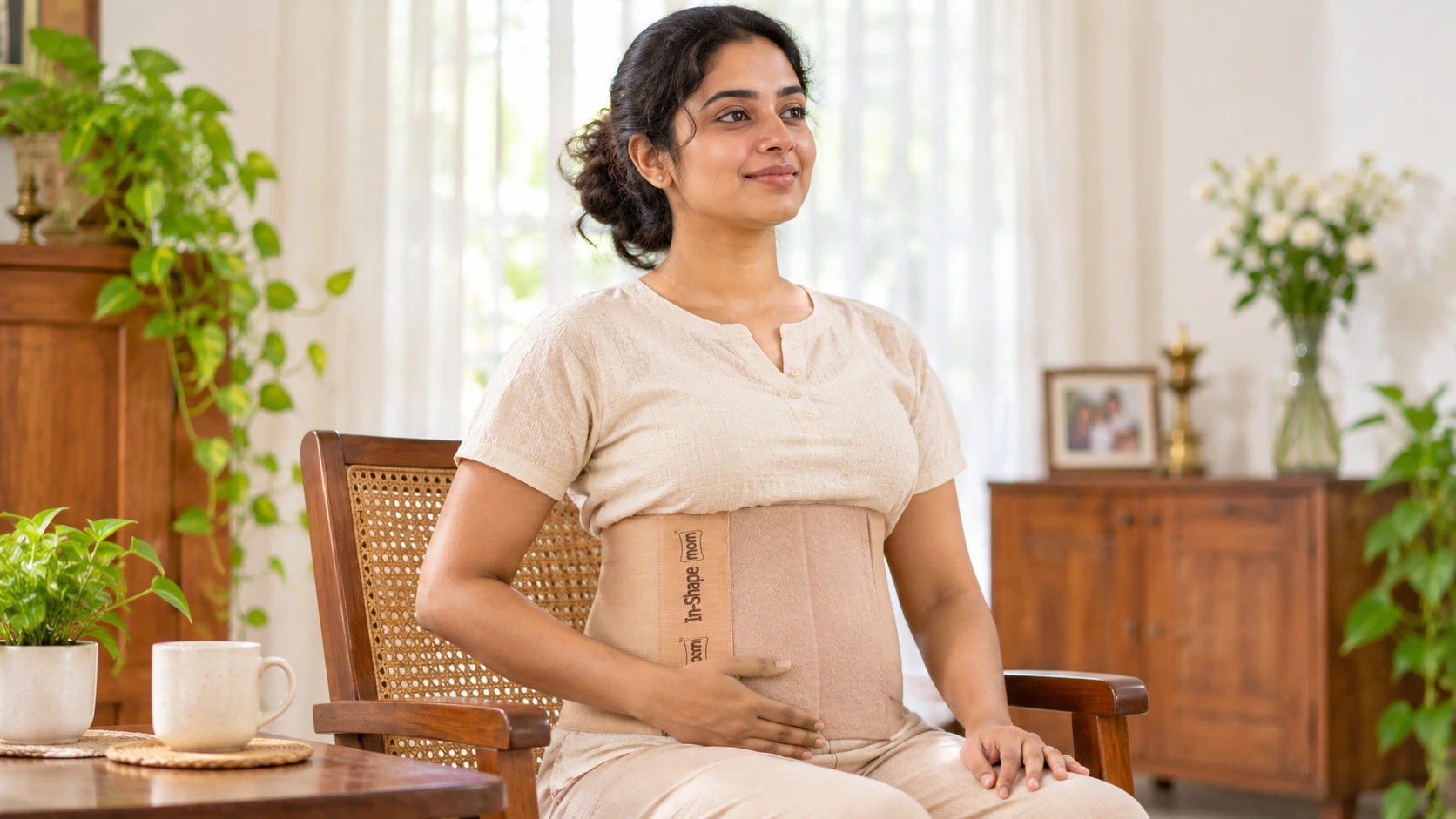
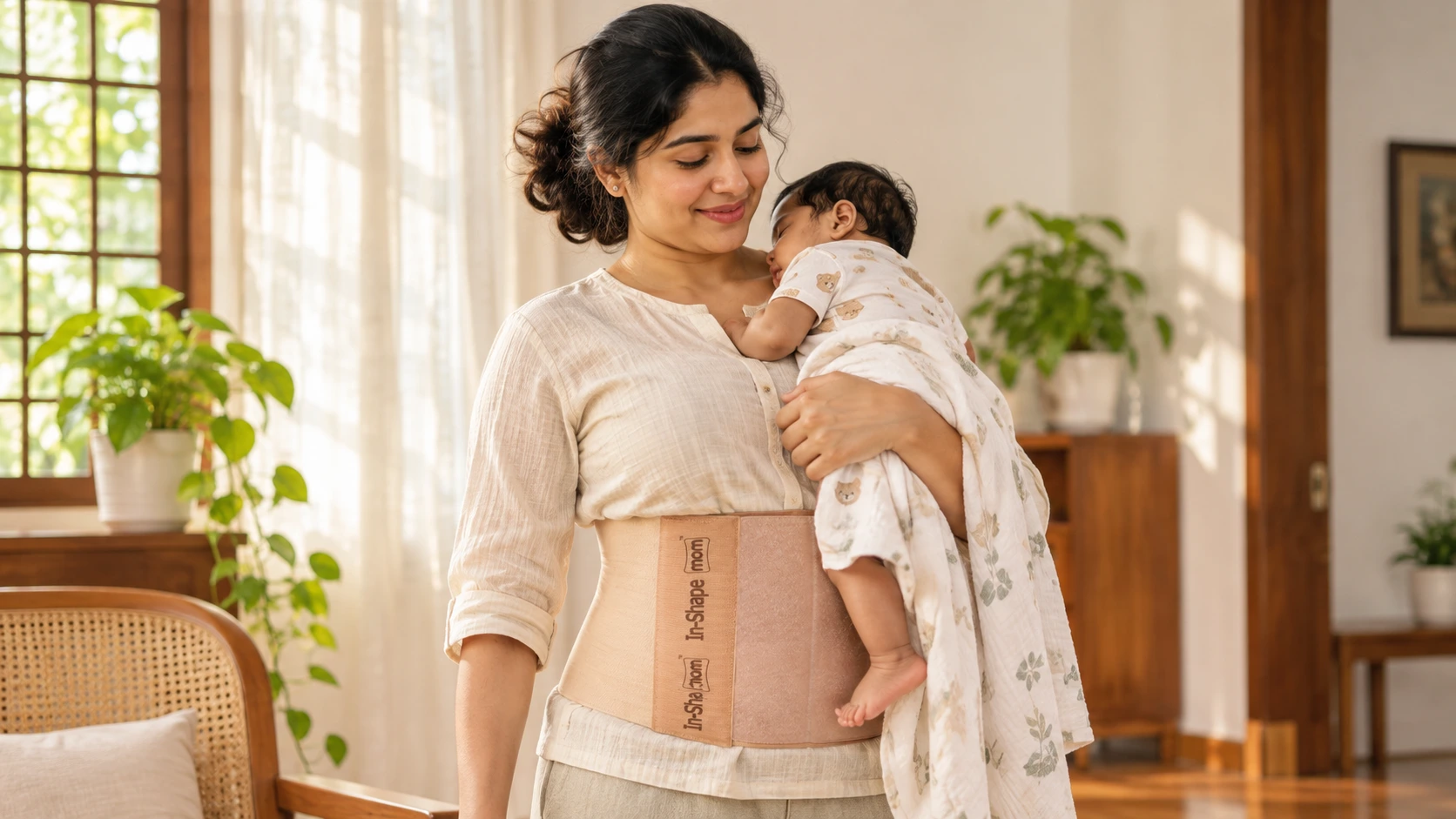
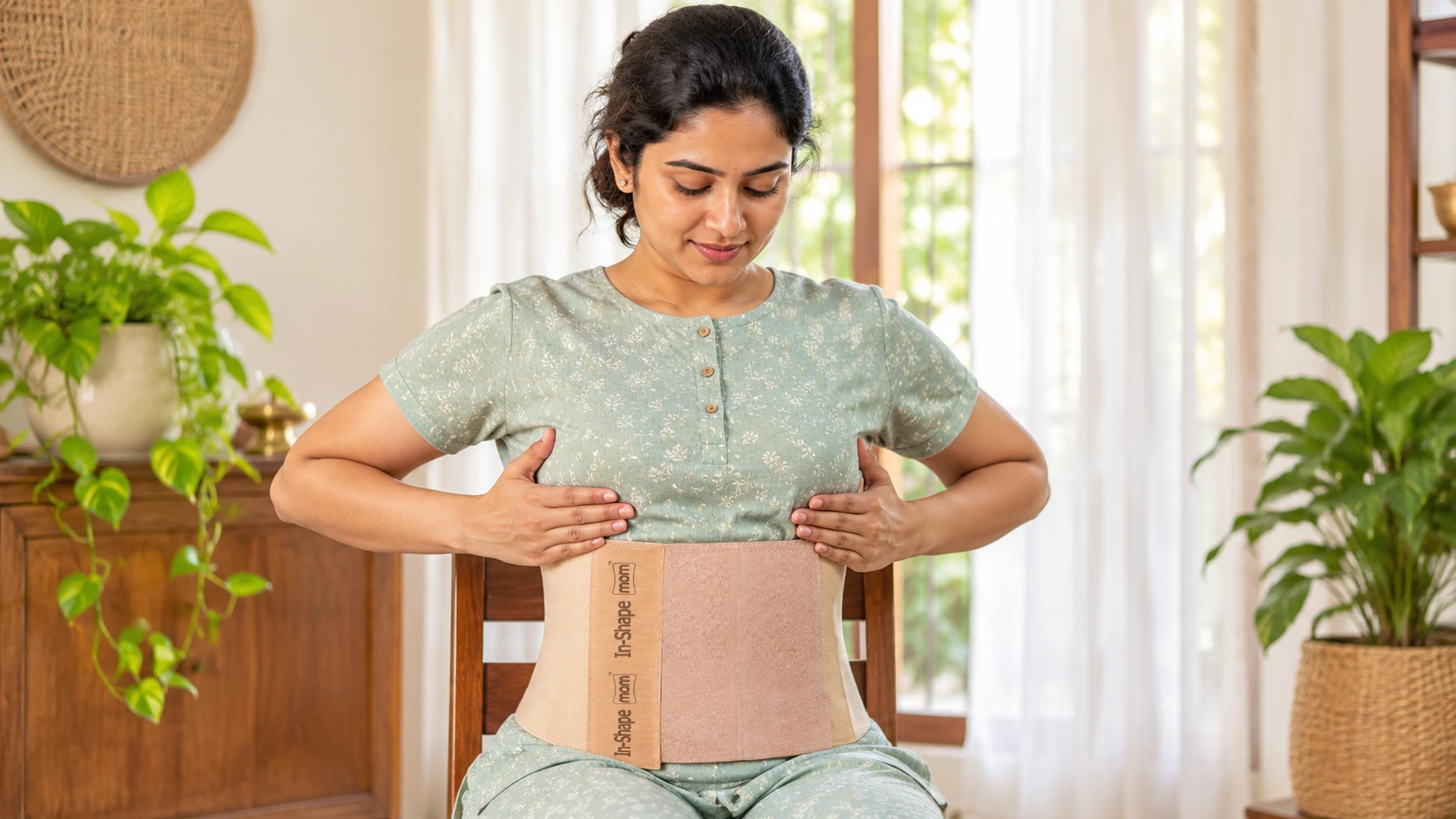
When your upper abdominal muscles lack the tension needed to anchor your ribcage, external support provides valuable proprioceptive feedback. Wearing an anatomical binder like the In-Shape mom postpartum belt delivers gentle, horizontal compression across your midsection. This stabilizes your abdominal wall, encourages a neutral stack between your ribs and pelvis, and relieves upper back fatigue during daily tasks.
3. Release Tight Mid-Back and Chest Muscles
Tightness in your upper back and chest locks your ribs in an elevated posture. Sit tall on a chair, interlace your fingers, and gently press your palms forward while rounding your upper back slightly to stretch the space between your shoulder blades. Pair this with gentle doorway chest stretches to open the front of your shoulders.
4. Stack Your Ribs Over Your Pelvis When Standing
Whenever you stand to rock your baby or walk around your home, check your alignment. Avoid thrusting your chest forward or locking your knees. Soften your knees slightly, untuck your tailbone, and imagine your ribcage resting directly over your pelvic bowl like two stacked bowls.
Supporting Long-Term Alignment Safely
Addressing postpartum rib flare is a gradual process of gentle re-education rather than forceful pulling or tight lacing. By combining full-exhale breathing exercises, mindful daily posture, and breathable core compression, you can restore comfortable alignment and breathe with ease.
Give your upper and lower core balanced anatomical support throughout your recovery. Explore the In-Shape mom recovery belt collection at In-Shape Global.