During pregnancy, the extraordinary outward pressure on your abdominal wall paired with hormone-induced tissue softening can strain the central abdominal midline. For some new mothers, this strain causes a weakness or small tear in the connective tissue near the navel, leading to an umbilical hernia. Navigating postpartum hernia care requires gentle management, movement awareness, and external structural stabilization to prevent further tissue protrusion while rebuilding deep core strength.
Understanding how to protect this delicate umbilical wall allows you to move, lift, and recover without increasing intra-abdominal strain.
What Causes a Postpartum Umbilical Hernia?
As your baby grows, your abdominal wall expands to its limit. This continuous pressure stretches the linea alba—the fibrous band of connective tissue running down the center of your stomach—and can cause the tissue surrounding the belly button to thin and weaken.
Following delivery, if intra-abdominal pressure rises sharply during activities like heavy lifting, coughing, or straining, a small section of fatty tissue or intestine can push through this weakened umbilical ring. This creates a soft bulge at or near the navel, known as an umbilical hernia.
Common Symptoms to Monitor
Recognizing the signs of a postpartum umbilical hernia helps you manage your recovery safely:
- Visible Umbilical Bulge: A soft, noticeable bump or swelling at or directly above the belly button.
- Localized Pressure or Aching: A dull, dragging sensation near the navel that worsens when standing for long periods or lifting your baby.
- Increased Protrusion with Strain: A bulge that becomes more prominent when coughing, sneezing, laughing, or sitting up straight.
4 Essential Steps for Postpartum Hernia Care
Managing an umbilical hernia after childbirth involves minimizing outward pressure on the midline while gently re-educating your deep stabilizing core.
1. Stabilize the Midline with Core Compression
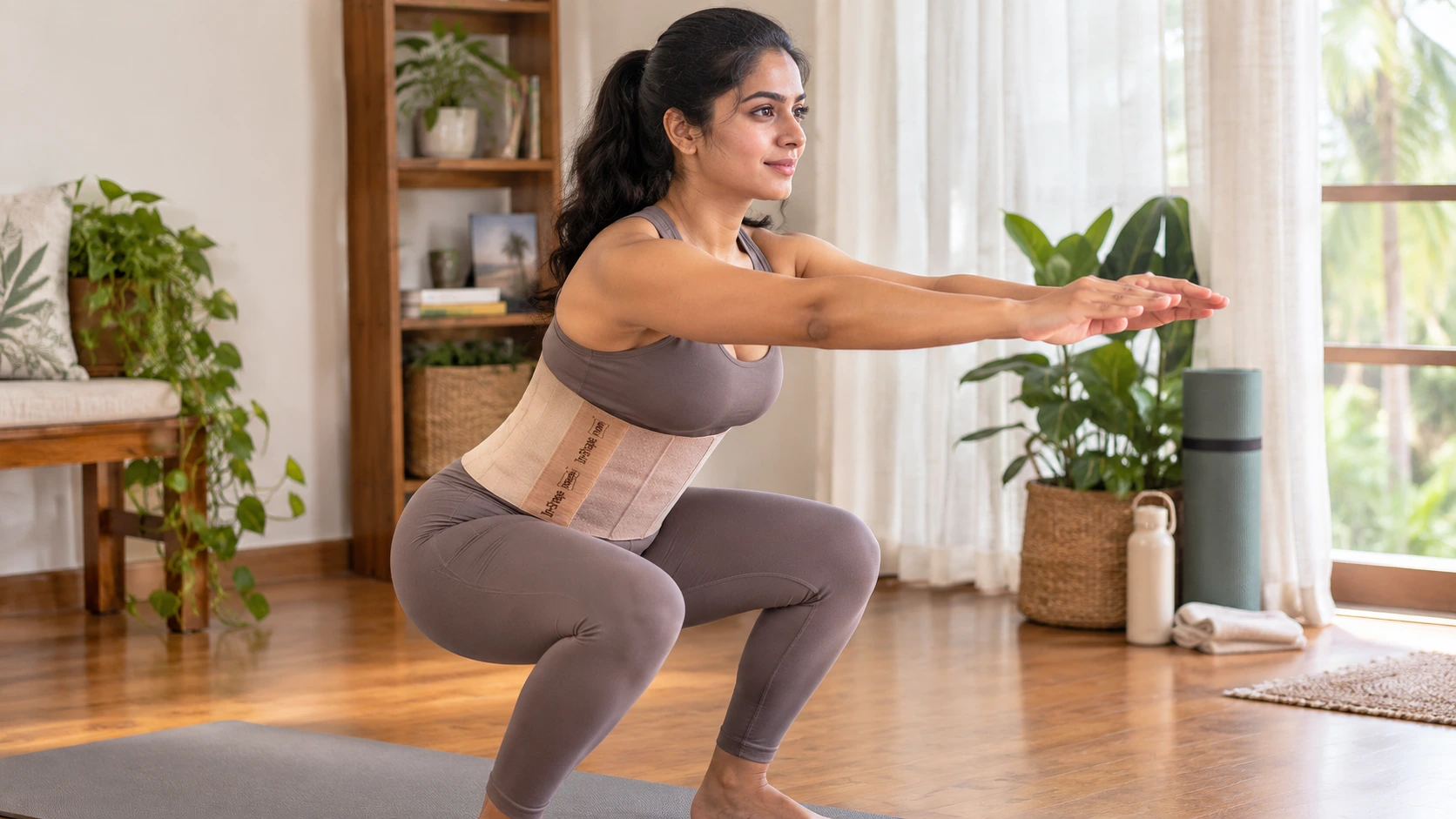
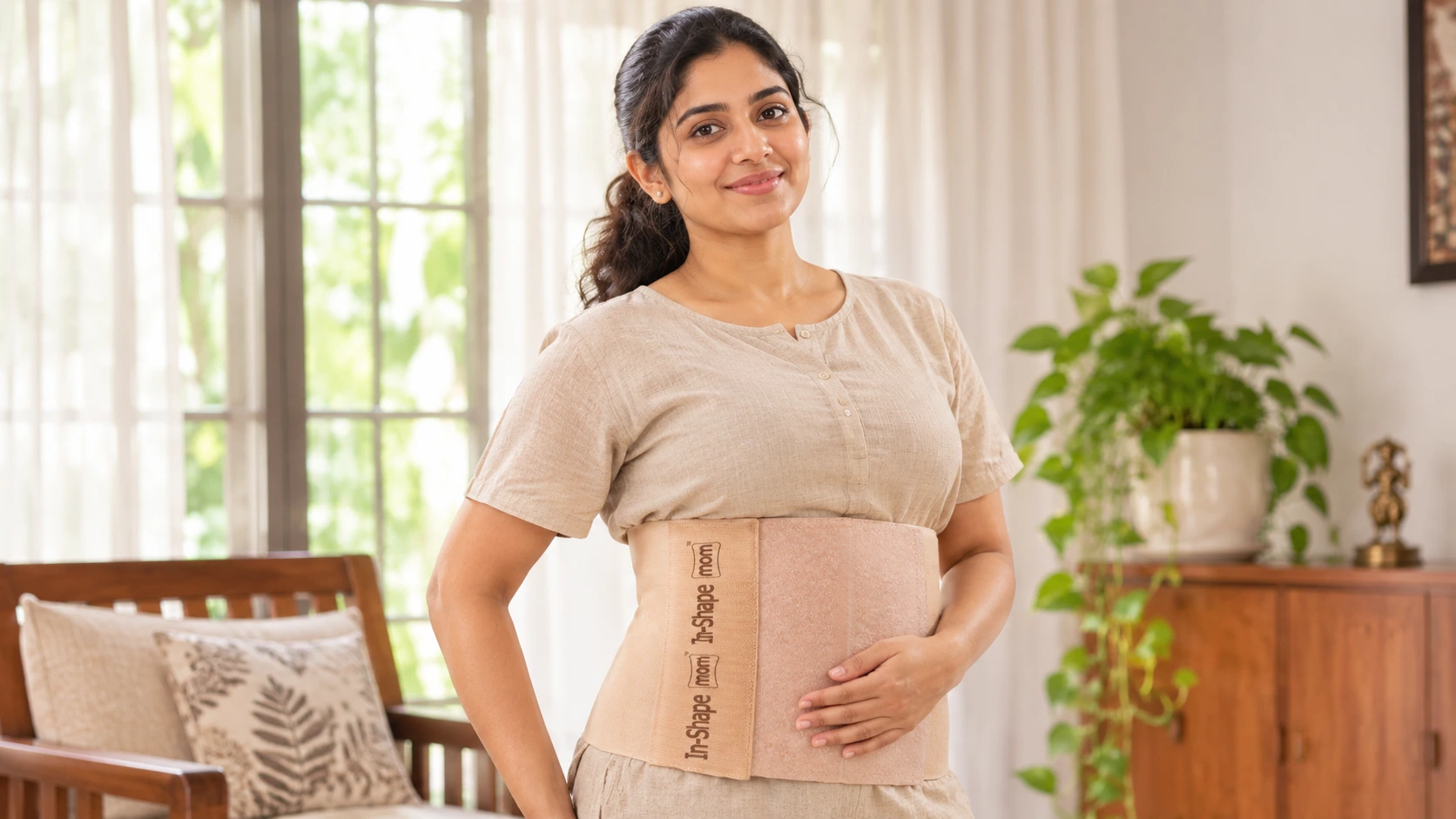
When connective tissue near the navel is compromised, external structural reinforcement is vital. Wearing an anatomical binder like the In-Shape mom postpartum support belt provides consistent horizontal compression across the abdominal wall. This holds tissues gently in place, reduces strain on the umbilical ring during daily activities, and promotes an upright posture, making it a foundation of safe postpartum hernia care.
2. Avoid Heavy Lifting and Intra-Abdominal Strain
Lifting heavy objects (including toddlers or heavy car seats) forces your core to bear down, increasing internal pressure against the hernia site. When lifting your newborn, bend at the knees, hold your baby close to your chest, and exhale gently during the lift rather than holding your breath.
3. Prevent Midline Doming with the “Log Roll”
Avoid any movement that mimics a classic crunch or sit-up, as jackknifing forward creates a sharp spike in intra-abdominal pressure that can push tissue further out. Always roll completely onto your side before using your arms to push yourself up into a seated position.
4. Engage Deep Diaphragmatic Breathing
Rebuild internal support by focusing on the transverse abdominis—your body’s natural internal girdle. Practice gentle diaphragmatic breathing: inhale slowly to allow your lower ribs to expand sideways, and as you exhale, softly draw your belly button inward and upward without bearing down.
Protecting Your Umbilical Wall Safely
While severe or painful hernias should always be evaluated by a healthcare professional, practicing mindful mechanics and supporting your core wall helps protect your midsection during the fourth trimester. By avoiding strain and wearing ergonomic compression, you can move comfortably and care for your baby with confidence.
Protect your abdominal midline with gentle, science-backed support. Explore the ergonomic In-Shape mom recovery belt collection at In-Shape Global.