
The fourth trimester introduces you to a love like no other—but it also introduces your body to entirely new physical demands. Between nursing, rocking, changing diapers, and constantly gazing down at your beautiful newborn, you may notice a significant change in how you carry yourself.
For many new mothers, the shoulders start to round forward, the neck cranes down, and the upper back aches constantly. This common postural shift is affectionately (and sometimes painfully) known as the “Mom Hunch.”
Left unaddressed, poor alignment doesn’t just cause upper body tension; it can disrupt your core recovery and exacerbate lower back pain. Here is your expert guide to understanding postpartum postural changes and discovering simple, effective ways to realign your spine.
What Causes the “Mom Hunch”?
Postpartum postural misalignment is a physical response to both the lingering effects of pregnancy and the repetitive movements of early motherhood:
- Center of Gravity Shifts: During pregnancy, your growing belly pulled your center of gravity forward, forcing your lower back to arch and your shoulders to round to compensate. Your body often maintains this habit even after childbirth.
- The Nursing Posture: Whether breast or bottle-feeding, mothers spend hours every day leaning forward, bringing their chest down to the baby rather than bringing the baby up to the breast.
- Weakened Core Foundation: Your abdominal muscles (specifically the transverse abdominis) are stretched and weakened after birth. Without this internal corset holding you upright, your spine collapses into a slouched position.
4 Ways to Correct Your Postpartum Posture
You do not need to endure chronic neck and shoulder tension. Reclaiming your alignment is about mindful adjustments and strategic physical support.
1. Bring the Baby to You
The golden rule of ergonomic feeding and holding is to bring your baby up to your level. Use a firm nursing pillow or stack cushions on your lap so you can sit back securely against a chair while keeping your spine straight and your shoulders relaxed.
2. Practice the “Chest Opener” Stretch
To counteract hours of forward-leaning, take 60 seconds each day to open your chest. Stand in a doorway, place your forearms on the doorframe with your elbows at a 90-degree angle, and gently step one foot forward. You will feel a deep, relieving stretch across your chest and the front of your shoulders.
3. Support Your Lumbar Spine
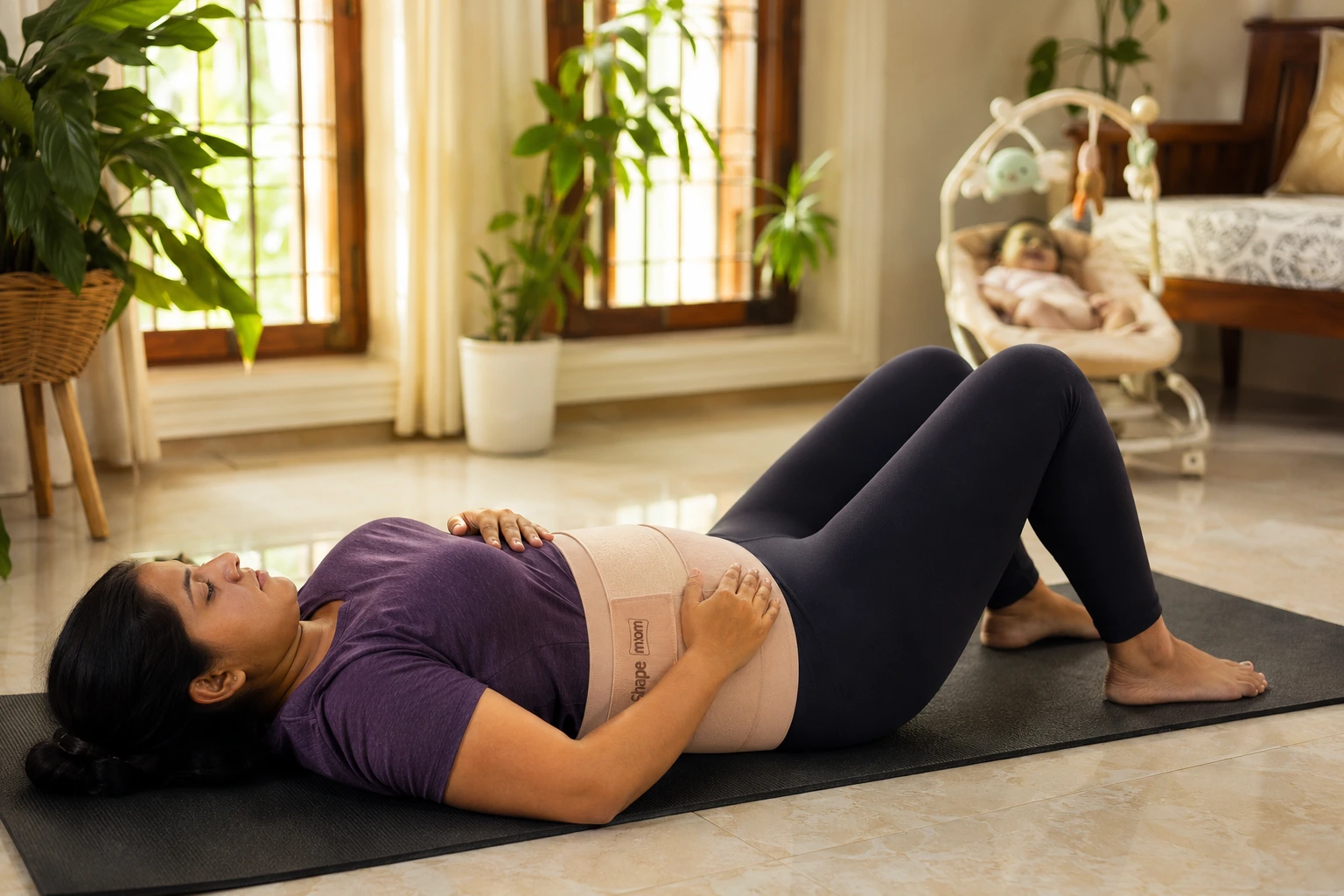
Posture starts from the ground up. If your lower back and core are unsupported, your upper back will naturally slouch. Wearing a structural postpartum binder like the In-Shape mom belt provides vital external stability to your midsection. By gently compressing the abdomen and supporting the lumbar spine, the belt cues your body to sit taller, making it significantly easier to maintain an upright posture during daily tasks.
4. Sleep in Alignment
Your body heals while you sleep. Avoid sleeping on multiple thick pillows that push your head forward. If you sleep on your side, place a pillow between your knees to keep your hips squared and your lower spine neutral.
Stand Tall in Motherhood
Correcting your posture is a crucial step in your overall postpartum recovery. By consciously adjusting your daily habits and giving your core the external support it needs, you can relieve upper body tension, breathe deeper, and care for your baby with renewed comfort.
Give your spine the support it deserves. Explore the ergonomic, core-stabilizing benefits of the In-Shape mom recovery belt at In-Shape Global.