
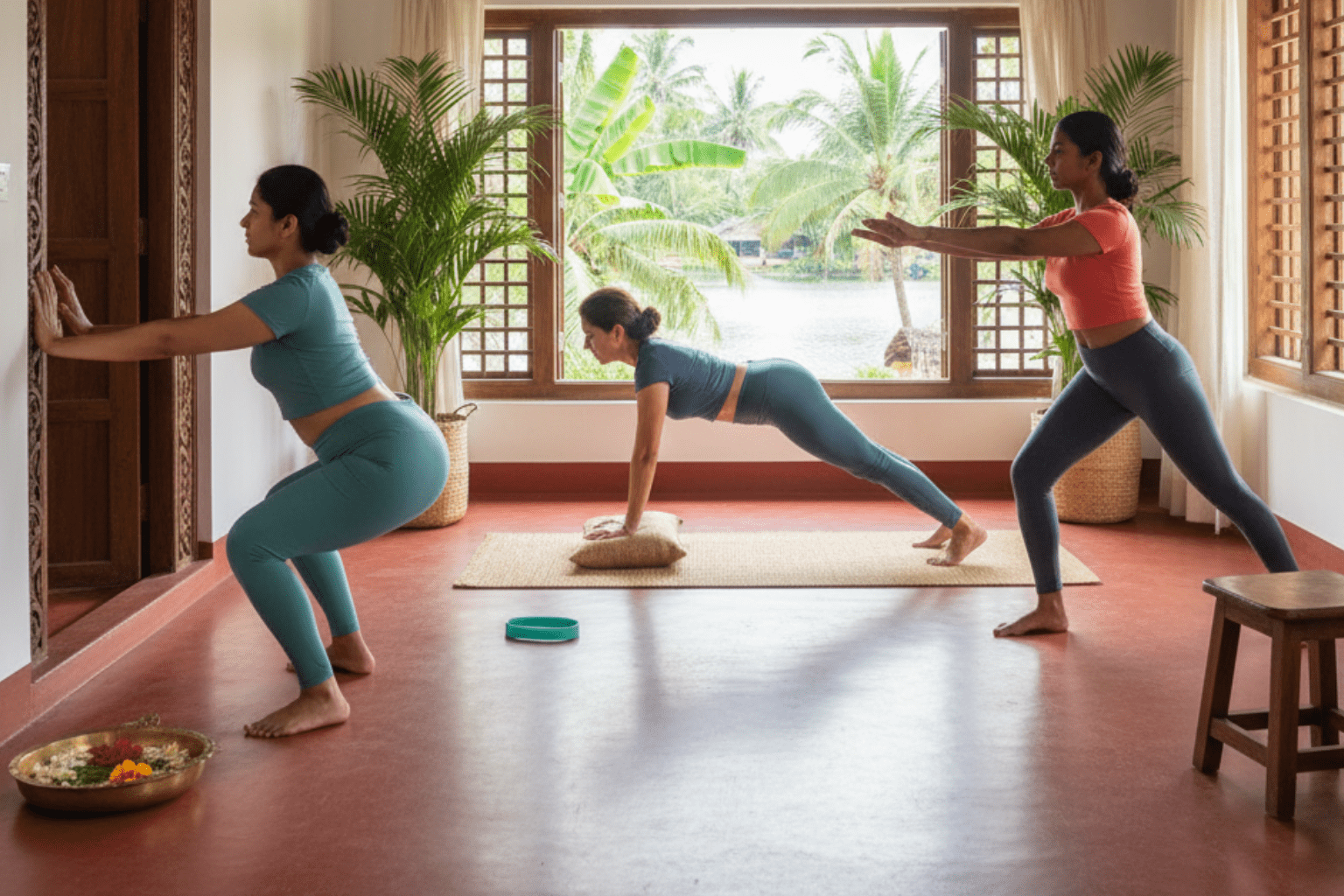
Doing endless Kegels isn’t the answer for everyone. True pelvic floor recovery means combining strength, mobility, and breath control. This helps you lift, run, and move without leaks or pain. In this guide, you’ll explore pelvic floor strengthening exercises that go beyond Kegels. These evidence-based moves can be done at home to build support, reduce pressure, and restore confidence. Whether you’re postpartum, recovering from prostate surgery, or dealing with back or hip tightness, these workouts help your pelvic floor relax when it should and activate when it needs to.
Why Go Beyond Kegels?
Kegels alone often miss the full picture. Here’s why balance matters:
- Coordination beats clenching: Your pelvic floor must both relax and contract on cue.
- Breath and core synergy: Breathing correctly reduces pressure and improves endurance.
- Strong hips and glutes: These muscles stabilize your pelvis and support the floor.
- Length plus strength: Recovery needs both relaxation and control, not just squeezing.
Before You Start: Safety First
Before beginning, take a quick safety check:
- Stop and see a pelvic health PT if you feel pain, pressure, or a new bulge.
- Postpartum or post-prostatectomy? Start gently, focus on form, and progress slowly.
- Always exhale during effort and avoid holding your breath or pushing down.
For more information, visit the ICS (International Continence Society) patient resources.
Advanced Pelvic Floor Recovery Exercises (Beyond Kegels)
Below are exercises that train your breath, coordination, and strength in the right sequence.
1. 360 Diaphragmatic Breathing (Down-Training)
How: Sit tall or lie on your back. Inhale through your nose to expand your ribs, belly, and lower back. Feel your pelvic floor gently lengthen. Exhale through pursed lips and feel it lift lightly.
Dosage: 6–10 slow breaths, 1–2 sets. Use as a warm-up or between sets.
As a result, your body moves better and feels stronger during daily activities and improves awareness and helps reduce tension before strength work.
2. Core Connection Breath (TA + Pelvic Floor)
How: Lie on your back with knees bent. On the exhale, gently draw your lower belly inward and lift your pelvic floor slightly. Inhale to relax completely.
Dosage: 8–12 reps, 2–3 sets.
Over time, this creates a stronger link between your breath, deep core, and pelvic support. Furthermore, it builds control and coordination for every move that follows.
3. Pelvic Clocks
How: Lie on your back with knees bent. Imagine your pelvis as a clock. Slowly tilt to 12–6–3–9 o’clock without lifting your ribs or holding your breath.
Dosage: 1–2 minutes of slow motion.
This improves coordination and mobility through your lower spine and hips. As a result, it helps release stiffness that can increase pressure on your pelvic floor.
4. Bridge with Adductor Squeeze
How: Place a small ball or pillow between your knees. Exhale to lift into a bridge while gently squeezing the ball and lifting your pelvic floor. Inhale to lower and relax.
Dosage: 8–12 reps, 2–3 sets.
Progress: Add a mini band around thighs or hold 2–3 seconds at the top.
In addition, this exercise strengthens your glutes and inner thighs for better pelvic alignment.
5. Dead Bug with Breath
How: Lie on your back with ribs down. Exhale to brace, lift your pelvic floor, and extend the opposite arm and leg. Inhale to return and relax.
Dosage: 6–10 reps per side, 2–3 sets.
Progress: Add a resistance band overhead or light ankle weights.
This builds coordination between your breath, core, and pelvic control.
6. Bird Dog (Anti-Rotation Stability)
How: Start on all fours. Exhale to brace and reach opposite arm and leg, keeping hips level. Inhale to return softly.
Dosage: 6–10 reps per side, 2–3 sets.
Progress: Add a light resistance band pulling sideways for extra challenge.
This exercise builds total-body stability and helps your pelvic floor react to movement.
7. Side Plank with Top-Leg Lift
How: From your knees (modified) or feet (full), exhale to lift into a side plank. Raise your top leg slightly without rolling forward or back. Inhale to lower.
Dosage: 20–30 seconds or 6–8 reps per side, 2–3 sets.
Progress: Hold longer or add a mini band at your ankles.
It strengthens the side body and glutes—key for pelvic balance.
8. Squat to Box (Functional Sit-to-Stand)
How: Sit back toward a chair or box. Inhale as you lower and relax your pelvic floor. Exhale to stand and lift the floor gently.
Dosage: 8–12 reps, 2–3 sets.
Progress: Hold a light dumbbell or kettlebell.
This exercise mirrors daily movement and improves functional strength.
9. Monster Walks (Glute Med Focus)
How: Loop a mini band around your ankles or above your knees. Keep soft knees and a neutral spine. Step out and forward or backward while keeping your pelvis steady.
Dosage: 10–15 steps each direction, 2–3 sets.
Progress: Use a stronger band or increase steps.
This strengthens outer hips to reduce pressure on the pelvic floor.
10. Supported Deep Squat Hold (Lengthening Work)
How: Hold onto a sturdy support like a doorframe. Inhale deeply into your ribs and pelvic floor at the bottom of the squat, then exhale to stand tall.
Dosage: 3–5 breath cycles, 2–3 rounds.
Modify: Place heels on a wedge or books for comfort.
This move encourages pelvic relaxation and mobility—great for overactive muscles.
Pro Tips for Pelvic Floor Success
- Exhale on effort and inhale to relax.
- Use light effort (3–4/10) when lifting your pelvic floor.
- Focus on quality over quantity—stop if you feel pressure, pinching, or pain.
Sample Weekly Plan
Daily: 360 Breathing + Core Connection (5 minutes)
3 days/week: Strength circuit (Bridge, Dead Bug, Bird Dog, Squat, Side Plank)
2 days/week: Mobility focus (Pelvic Clocks, Deep Squat Hold)
Most days: Walk or cycle for 20–30 minutes
Consistency and gentle progression matter more than intensity.
When to Get Help
See a pelvic health PT if you notice:
- Ongoing leaks, pain, or heaviness
- Difficulty relaxing or feeling your lift
- No progress after 4–6 weeks
- Post-surgery or postpartum clearance not given
For trusted education, visit the International Continence Society website.
FAQs
Q: What are pelvic floor exercises beyond Kegels?
They train your breath, hips, and core so your pelvic floor moves naturally instead of just squeezing.
Q: How often should I do them?
Practice breathing and coordination daily. Strengthen 3 days per week with rest in between.
Q: Are these safe postpartum or after surgery?
Yes, with medical clearance. Start slowly, focus on breathing, and progress gradually.
Q: How do I know if my pelvic floor is tight or weak?
Tight floors can’t relax; weak ones fatigue quickly. A pelvic health PT can assess accurately.
Q: Can I overdo pelvic floor workouts?
Yes—too much tension can worsen leaks or pain. Balance effort with full relaxation.
Q: What equipment do I need?
A mini band, small ball or pillow, and a sturdy chair or box work perfectly at home.
Q: When should I see a specialist?
If symptoms like pain, pressure, or leaks persist beyond 4–6 weeks, seek a pelvic health PT.